
The Commander Bracket System Grades Cards, Not Intentions

Here's the sentence that starts every bracket argument you've ever had: this rating system is supposed to grade "intent." That's the official language. But go read the actual checklist the panel hands you: the s list, the ban on mass land denial, the ban on chaining extra turns, an expected turn-window for when the game should end. None of that asks what you meant to build. It asks what your deck does.
Take Uril, the Miststalker. A player builds around one hexproof beater and stacks a dozen Auras on it, and by intent that reads as harmless theme-crafting, a "big dumb monster" deck built for fun. By composition, it's a one-shot commander damage combo that ends games in a single combat step once it goes unanswered. Nothing about "I just like big creatures" changes what Uril, the Miststalker actually does at the table. That gap between the story a pilot tells and the math their deck runs on is the real source of every bracket dispute in this format, not sloppy rules-lawyering.
Quick Answer: What Does Intent Mean in the Commander Bracket System?
Intent is the stated goal behind a deck: a casual theme, precon-level power, tuned synergy, or a genuine cEDH build. The bracket number itself, though, gets assigned by objective composition signals: whether the deck runs any of the flagged high-power staples, whether it packs widespread land destruction or a chained extra-turn package, and what turn it actually tends to close games. Intent and composition are supposed to work together through a Rule Zero conversation. When they disagree, composition is what your opponents actually experience.
Turn-Win Expectations Across the Commander Bracket System
The community consensus on mtg commander brackets breaks down roughly like this: Core games typically wrap up by turn eight, with the win condition visible well before it lands. Upgraded tables usually close things out by turn six or seven, often off a two-piece combo that snaps together fast. Optimized games move quicker still, frequently ending by turn four or five, sometimes without combat ever happening. True cEDH isn't defined by speed at all, it's defined by building against a known, studied metagame.
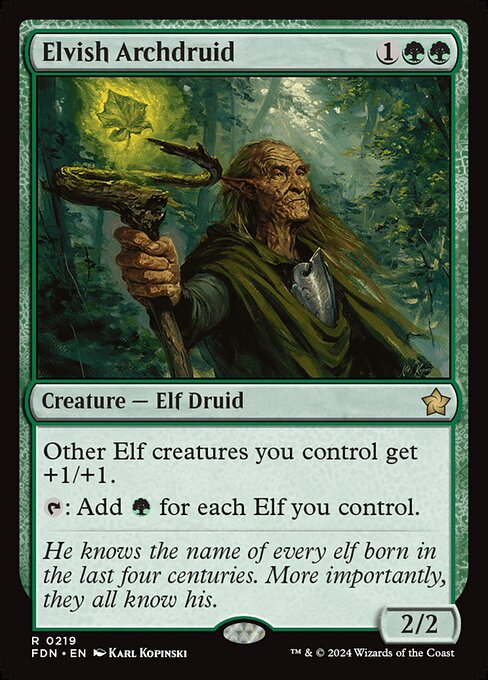
Now run Elvish Archdruid into Craterhoof Behemoth through that ladder. Eight to twelve one and two-mana Elves, Elvish Archdruid tapping for green mana equal to your Elf count, and a turn three or four Craterhoof Behemoth granting trample and a huge power boost to your whole board. On paper that's "creature typal." On the clock, it's indistinguishable from an Optimized-bracket kill. Same turn number, completely different meaning depending on how the deck got there.
Where Self-Rating Goes Wrong
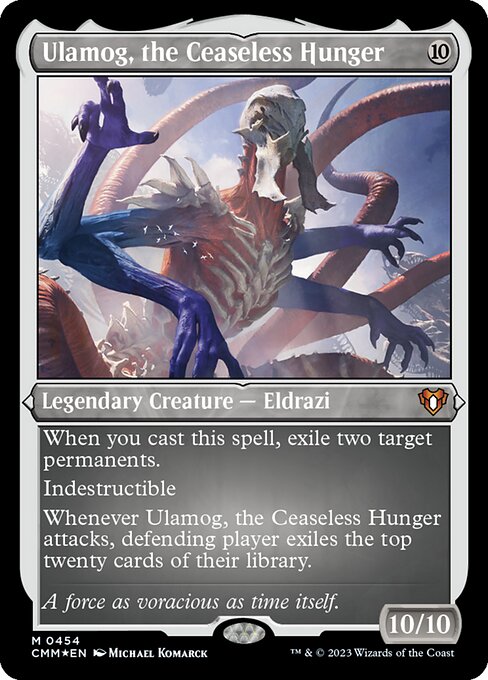
I watched a turn-five Ulamog, the Ceaseless Hunger deck end what should've been a turn-eight game with zero warning. Nobody lied. The pilot just rated their deck by vibes instead of turn-count history.
The community heuristic on this is blunt: most players overrate their own deck by a full bracket. What feels like cEDH is usually Bracket 4. What feels like Bracket 3 is usually Bracket 2. And a genuinely Bracket 1 deck almost never wins before turn nine, which is a useful gut check the next time someone claims their deck is "just casual."
There's also a structural trap sitting between Brackets 3 and 4. High-synergy, tutor-free decks that are too strong for an Upgraded pod but not tuned enough to call Optimized live in a dead zone that resists accurate labeling no matter how carefully you apply intent or composition on their own. That's not a mislabeling problem, that's a gap in the ladder itself.
Two Decks That Fool the Turn-Count Test
Uril, the Miststalker is the clean Voltron case. Hexproof means opponents can't target Uril, the Miststalker itself with removal, so the actual threat, a lethal commander-damage attack, sits waiting behind a wall nobody can point a spell at directly. Opponents still have answers: strip the Auras themselves, since those permanents don't share Uril's hexproof, or wrath the board before Uril ever swings. A table that clocks what's coming neutralizes the threat before the kill turn ever gets observed, which suppresses the deck's measured win-turn and makes a build built to close games fast look slow on paper.
The Elfball version, Elvish Archdruid into Craterhoof Behemoth, hides behind "it's just tribal." Strong Elf synergy isn't a Bracket 1 deckbuilding choice, it's good mechanical synergy, and Bracket 1 is something you do to your deck on purpose to make it worse for the showmanship of it. Thematic packaging hides Bracket 3 or 4 composition underneath, the same trick Uril pulls with hexproof.
Why One Time Warp Doesn't Break Core
Work backward from what the extra-turn restriction is actually trying to stop: one player chaining turn after turn until the rest of the table stops existing as participants in the game. That's the failure state. A single extra turn isn't.
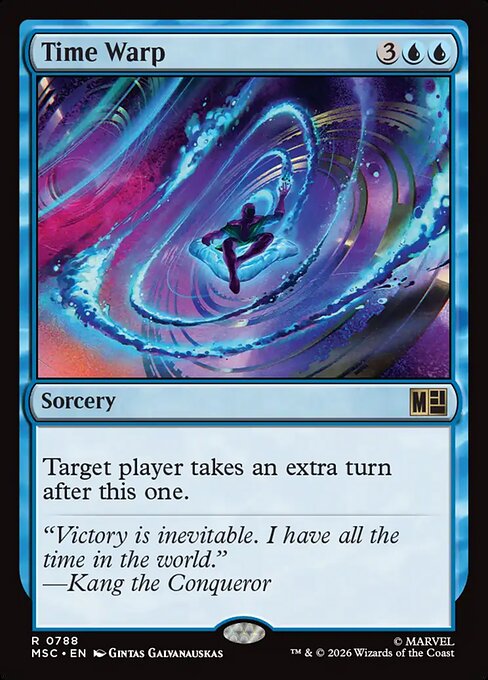
That's why Bracket 2 explicitly bans chaining extra turns but not the mere presence of one. The panel's own example is a coin-flip deck that occasionally grants an extra turn off a card like Time Warp. One incidental hit doesn't push that deck out of Core. What would push it out is stacking Time Warp alongside two or three more extra-turn effects built to link together into a lockout.
Notice what's drawing that line: it's a count, how many extra-turn effects exist and whether they combo, not a claim about what the pilot meant by including Time Warp. It's the one spot in the whole bracket framework where the panel skipped the intent debate and just wrote a hard number instead.
The 30-Second Self-Rating Heuristic
Skip the vibes check. Run the hard signals first: any stax pieces in the 99, any widespread land destruction, any chained extra-turn package, and an honest look at what turn your deck has actually closed games on over its last several outings. That's composition, and it's not negotiable.
Then, and only then, run the three-question Rule Zero conversation the panel itself leans on: competitive or social experience, which play patterns to avoid, and how strong are the decks at this table. That conversation catches the nuance a checklist can't.
Here's the number to anchor on. If your deck has won, or reliably could win, before turn six without a combo needing just two cards doing the actual work, it's Bracket 4. It doesn't matter how you describe it at the table. Composition sets the number. Intent only nudges it at the margins.
Composition Sets the Floor, Intent Only Moves the Needle
When composition and intent disagree, composition wins almost every time. Intent should function as a tiebreaker for genuinely ambiguous cases, like a single incidental Time Warp sitting in a build that isn't structured around it, not as an excuse for a deck that wins fast or survives long because of the cards actually in it.
Voltron shells like Uril, the Miststalker and fast Elf tribal decks running Elvish Archdruid into Craterhoof Behemoth are exactly where this gets contested hardest, and they'll keep getting mis-rated by pilots who point at theme instead of turn-win data. So do the actual work: log what turn your deck won its last five games. If that number sits under six and there's no two-piece finisher carrying the win, it's Optimized. What the deck is "about" doesn't get a vote.