
The Trample Misplay That Costs Games
Here's the play that's cost more games than a missed land drop: someone doubles their trampler's power, THEN tries to figure out how much gets assigned to the blocker, and suddenly the math doesn't work and nobody at the table can agree why. Or the reverse: a player looks at an indestructible blocker and assumes it's a black hole that eats damage forever, so they hold back their trampler instead of swinging for what should be massive damage to the face. Both players are making the same mistake. They're treating trample as a raw arithmetic shortcut, "power minus toughness equals what gets through," when it's actually a two-step legal sequence with a specific gate: you assign enough damage to kill every blocker first, and only THEN does anything become "excess" that can go to the player.
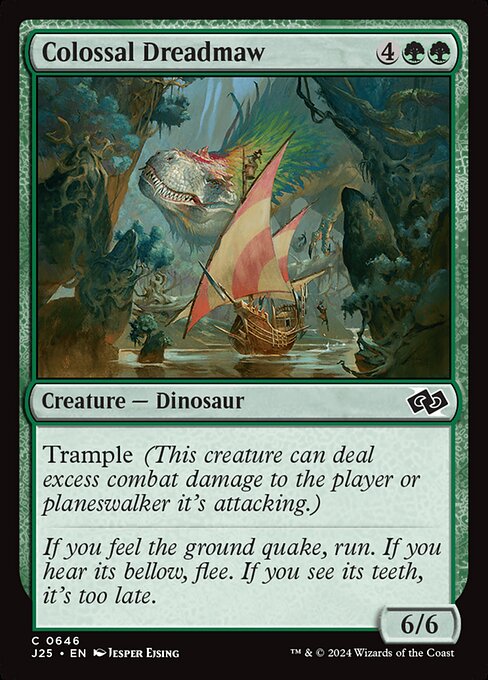
Colossal Dreadmaw is the cleanest way to see this before any complications get stacked on top. A 6/6 with trample, no other text, no keywords fighting for attention. Blocked by a 3/3, the Dreadmaw assigns 3 (enough to kill it) to the blocker and the remaining 3 tramples over. Simple. That baseline case is where every player's intuition works fine. It's the moment you add indestructible, deathtouch, or a damage doubler that the intuition breaks, because all of those modify what happens to damage after assignment, not the assignment itself.
Quick Answer
Lethal damage for trample purposes is the blocker's toughness minus any damage already marked on it. Deathtouch drops that number to 1 regardless of toughness. Indestructible, fog-style prevention, protection, and effects that double damage do not change this calculation at all. They only affect what happens to the damage once it's been assigned and dealt. Once every blocker has its assigned minimum, everything left over goes to the player or planeswalker.
Indestructible Doesn't Change the Math, It Changes the Aftermath
Start from what indestructible actually says: damage and effects that say "destroy" don't destroy this creature. It doesn't say "this creature requires less damage to be assigned" or "trample ignores this creature." The keyword intercepts the destroy result, not the damage itself, and it never touches the state-based action's damage calculation, it just makes the creature ignore that check once the damage is marked.
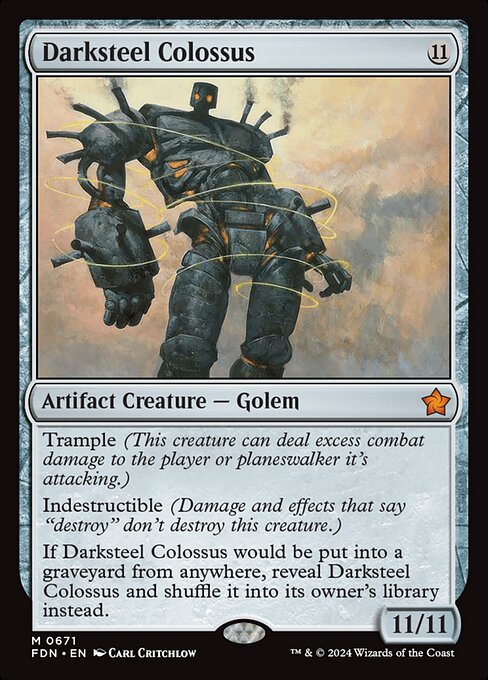
Put Darksteel Colossus on the other side of combat as a blocker. It's an 11/11 with indestructible and trample of its own, but forget its trample for a second and just look at its toughness: 11. Any attacker with trample facing this thing down has to assign a full 11 damage before a single point can go to the player, exactly as if Darksteel Colossus had no protective keyword whatsoever. Indestructible never lowers that number. The only way around it is if Darksteel Colossus already has damage marked on it from something that resolved before combat damage, say a burn spell or a fight effect that dealt 11 or more to it earlier that turn. In that case the marked damage already clears the threshold, Darksteel Colossus survives because indestructible stops it from dying, and your attacker's entire combat damage total can go straight to the player's face. The colossus doesn't die either way. But whether your damage gets stuck on it or sails past it depends entirely on when that damage got marked, not on the fact that it's indestructible.
Deathtouch and Trample: The Efficiency Exploit
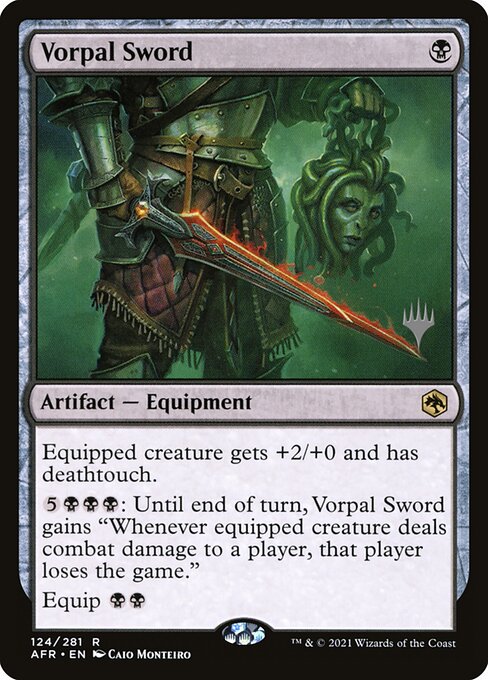
Vorpal Sword equips for two and gives the equipped creature +2/+0 and deathtouch. Nothing about that is game-breaking on its own. Then you put it on Colossal Dreadmaw.
Deathtouch changes the entire lethal-damage equation because any nonzero amount of damage from a deathtouch source is considered lethal, no matter the blocker's actual toughness. Your 8/6 deathtouch Colossal Dreadmaw (that's the base 6/6 plus the sword's +2/+0) doesn't need to assign 6, or 11, or whatever monstrous toughness a blocker is packing. It needs to assign exactly 1. Blocked by that same 11-toughness Darksteel Colossus from the section above, the deathtouch Dreadmaw assigns 1 to clear the lethal threshold and sends 7 straight to the player's dome. Deathtouch collapses the assignment requirement to a single point of damage, which means a mid-sized creature with trample and deathtouch is functionally unblockable for damage purposes. Nobody profitably blocks that attack, because every point of toughness you're throwing in front of it beyond one is wasted, and every attacker with this combo attacking your commander or your face should be treated as a near-full-power hit regardless of what's standing in the way. This is the pairing you build a deck around, not a cute rules trick you stumble into once.
Double Strike Creates a Real Second Combat Step, Not Just Extra Damage
The misplay here is treating the mechanic like a flat damage bonus stapled onto one combat step. It isn't. The keyword creates an entirely separate damage step that happens before the normal one, and only creatures with first strike or the ability itself participate in that first pass. The regular damage step happens afterward, and only creatures that haven't already dealt damage (plus anything still carrying the keyword) act in it.
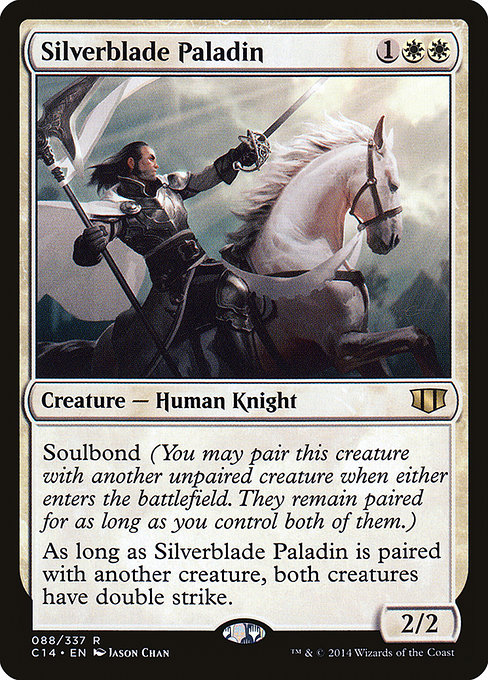
Silverblade Paladin is the cleanest illustration in Commander because its Soulbond ability hands the keyword to whatever it's paired with, for free, the moment either creature enters the battlefield and you choose to pair them. Pair it with a deathtouch trampler and watch what happens: in that first damage step, the creature assigns its deathtouch-lethal damage to the blocker and tramples the rest over. The blocker dies right there, before the normal step even begins. When the second pass arrives, the attacker is completely unblocked as far as damage assignment is concerned, because the creature that was supposed to eat the second half of the damage isn't on the battlefield anymore. All of it, the creature's full power, goes to the player. Players who don't track double strike as two genuinely separate assignment events routinely undercount how much gets through, especially when a blocker dies mid-combat and they forget the second step even happens.
Why Fog Effects and Damage Doublers Get Misplayed the Same Way
A 0/6 prevention wall, the classic setup that shuts off damage the moment it would be dealt, doesn't reduce what your trampler needs to assign. The wall stops damage from being dealt, but assignment happens as its own legal step before dealing does, and the toughness-based lethal number doesn't care whether the damage is about to vanish into a prevention effect. Colossal Dreadmaw blocked by a 0/6 prevention wall still has to assign a full 6 to satisfy lethal, even though every point of it gets prevented and none of it actually marks the blocker. That 6 is gone. It doesn't trample over just because it was never going to land.
The doubler crowd makes the opposite mistake. Players assume you double the creature's power before figuring out the trample split, turning a 6/6 into a phantom 12/12 for assignment purposes. Wrong sequence. Assignment always uses the creature's actual power first, the threshold gets calculated and assigned off that base number, and only once damage is actually being dealt does a doubling effect apply. A 6/6 Colossal Dreadmaw against a 0/6 wall assigns 6 to cover lethal, leaves 0 excess, and THEN that 6 gets doubled to 12, all of which lands on the wall. Zero reaches the player. The doubler never rewinds the assignment step to give you more room to trample.
The 30-Second Heuristic for Any Trample Combat
Run this checklist before you touch the stack, not after your opponent points out you assigned it wrong.
- Find the real lethal number. It's the blocker's toughness minus whatever damage is already marked on it this turn. If your attacker has deathtouch, that number is always 1, period, regardless of toughness.
- Assign that number to every blocker first. Not a fraction of it, not "enough to probably kill it." The full lethal amount, to each blocker, before you're allowed to send anything to the player.
- Apply modifiers last. Indestructible, fog-style prevention, protection, effects that double damage, none of them touch the number from step one. They only change what happens once the damage is actually dealt.
If there's one build pattern that weaponizes this rather than just tripping over it, it's pairing a mid-size trampler with a single deathtouch source, whether that's Vorpal Sword, an aura, or an ability from your commander. Conventional trample math tells you to expect to assign near-full toughness to a big blocker and get scraps through. Deathtouch trample throws that assumption out entirely: a 4/4 with deathtouch and trample assigns just 1 damage to satisfy lethal against ANY blocker, including a 15-toughness wall, and sends the remaining 3 straight through to the player, and that adds up to more face damage over a game than most decks manage with their entire board. If you're building or piloting one of these threats, the actionable habit is simple: before you ever move a creature into combat, ask yourself what the correct number is for every blocker you might see. Do that math before you assign, not after your opponent's Fog Bank makes you wish you had.