
I've watched it happen more times than I can count. Someone slams down a stack of 100 cards they've been building for three weeks, cards they are genuinely stoked about, and the deck just... doesn't do anything. Turn three, turn four, turn five, nothing is happening except them shuffling through a hand of gas that has no way to hit the table. It's not a card quality problem, it's a planning problem, and it's the single most common mistake I see from anyone learning how to build a Commander deck.
You're Not Short on Good Cards, You're Short on a Plan

nobody tells new players: 100 cards including your commander is a brutally unforgiving number. Every single slot is a decision. There is no filler in a singleton format, because you only get one shot at each card. So when someone builds "forward" from turn one, just slamming in whatever looks powerful or fun, they end up with a pile instead of a deck.
I've seen decks running Rhystic Study, one of the best draw engines ever printed, that still lose consistently. drawing extra cards doesn't matter if none of those cards actually close the game. Value without a wincon is just a really expensive way to lose slowly. Decide your bracket, decide how the deck actually wins, and only then start filling in the 99. Build forward from turn one and you get a pile of cool cards. Build backward from the win, and every card in your list is pulling weight toward that one moment.
Quick Answer
Start from a skeleton: 36 to 38 lands, 8 to 12 ramp pieces, 8 to 12 card draw sources, 8 to 12 single-target removal spells, and 2 to 4 board wipes. That's roughly 60 to 70 slots locked in before you touch a single synergy card. The remaining 30 to 40 slots are your wincon and your pet cards. Pick your commander, define how you actually win, set your bracket, then fill categories. Use EDHREC and Scryfall to validate your list at the end, not to build it from the start.
The Skeleton Every Deck Starts From
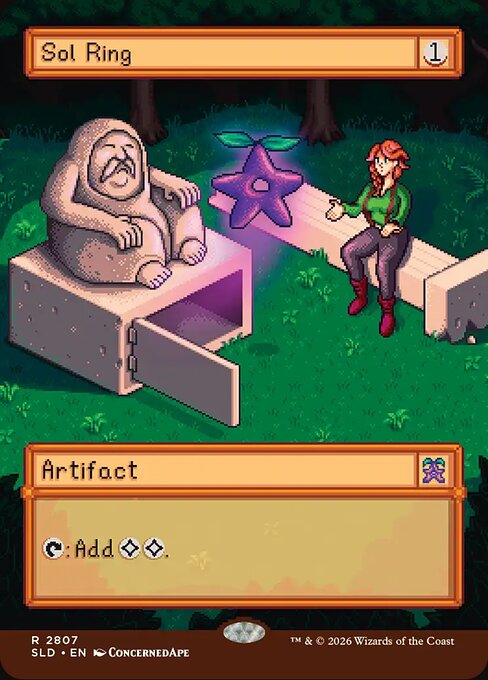
Here's the real math on your mana base: 36 to 38 lands plus 8 to 10 cheap, efficient ramp pieces is your actual number, not lands in isolation. Sol Ring is the baseline for a reason: turn one rock, taps for two, and suddenly your turn three play happens on turn two. Arcane Signet does a similar job but with a caveat worth knowing: it only makes mana in your commander's color identity, so it's better fixing when you're multicolor, but it's dead weight (or worse, useless) if your commander is colorless. Nothing fixes your colors for free quite like Command Tower, and it does it without adding a single point of curve weight, which is why it's an auto-include in basically any multicolor deck. Cultivate handles that same fixing job at sorcery speed, except it also thins your deck and sets up your next land drop.
A ramp spell that whiffs because you have no lands in hand is a brick, plain and simple. Cheap and efficient wins this slot every time, splashy doesn't. And if your commander costs five or six mana instead of three, push your land count up two to four, don't shave it down. More expensive commander means more lands, not less.
What a Deck Looks Like When the Ratios Are Wrong

You know the hand. Four lands, one spell you can actually cast, and it's a five-drop you're not casting until turn seven at this rate. Your curve skews too high. Average non-land mana value should sit around 2.5 to 3.5. Push it higher and your deck bricks. It does nothing on turns one and two, then gets blown out by a two-mana removal spell on turn three right as your one real threat finally hits the board. New-player synergy piles consistently skew too high, stacked with splashy five and six drops and nothing cheap to do early. The table watches you pass turn after turn doing nothing, and then your one big spell eats a Swords to Plowshares and you're right back to nothing.
The second failure mode is just as common: decks that rely entirely on the commander for draw, ramp, and the wincon all at once. First time it gets removed or countered, the whole deck falls over. Add redundancy instead, cards that double up on whatever your commander does, plus a backup win condition that doesn't need the commander alive to function.
Where the Rulebook Breaks: Voltron, Aggro, and Go-Wide

This is where the standard skeleton stops being law and starts being a starting point. A Voltron deck built around a single threat, something in the Uril, the Miststalker mold where one creature has to survive and connect, wants to trade most of its removal slots for 15 or more protection pieces instead. Hexproof, shroud, indestructible: that whole package matters more than any removal spell, because your one guy dying to a random -1/-1 counter spell before combat ends the plan right there.
Aggro decks go the other direction entirely. They intentionally run below the ramp and removal baseline, because every non-threat card is a tempo loss. You're not trying to survive to turn eight, you're trying to end the game by turn six, so every rock or dork that isn't a body on board is actively working against the plan.
Control shells and slower four-color piles push board wipes well past the 2 to 4 default, because their whole plan is surviving long enough to grind everyone else out. Go-wide token decks lean the opposite way on card draw: they need to refill the board every time a wipe clears it, so they run more anti-wrath insurance than the baseline suggests.
Build Up, Don't Build Down
I know the advice you've heard. Throw 150 cards you like into a list, then cut down to 100. It sounds thorough. It sounds like due diligence. In practice it produces the most confused, generic decklists I've ever seen, because nothing got prioritized before the cutting started. You end up cutting the cards that are easiest to cut, not the cards that don't fit your plan, because you never defined a plan in the first place.
Building up from a clear wincon flips this completely. You know what the deck is trying to do, so the cutting phase, which is genuinely the hardest part of deckbuilding, becomes dramatically easier. Every card either advances the plan or it doesn't. That's it, that's the whole test.
This is also where I'll push back on how people use build tools. Grabbing the top 10 cards from every category on a synergy site produces samey, generic builds that all kind of look the same. Scryfall's actual search lets you dig for cards that fit your specific plan instead of the plan everyone else already has. Use ranking tools at the end to catch synergy you missed, not at the start to populate your list for you.
The 30-Second Heuristic for Picking Your Commander and Ratios
If this is one of your first builds, pick a commander in one or two colors with a clear, self-sufficient ability that can carry a game on its own. Three-plus color commanders sound exciting, and I get the pull, but the mana fixing overhead is the number one source of new-player frustration I hear about. Save the four and five color piles for once you've got a build or two under your belt.
Here's the checklist, write it down: 36 to 38 lands, 8 to 12 ramp, 8 to 12 draw, 8 to 12 removal, 2 to 4 wipes. That eats roughly 60 to 70 slots. The remaining 30 to 40 are yours to build your actual plan into. And decide your bracket before you touch any of these numbers, because bracket sets the ceiling on how oppressive your wincon and interaction are allowed to be. A bracket 2 build and a bracket 4 build fill these same categories completely differently.
The Verdict on Ratios
The 36 to 38 land, 8 to 12 ramp, 8 to 12 draw, 8 to 12 removal, 2 to 4 wipe skeleton isn't a suggestion. It's the default for any first build, and I will die on this hill. The one place I'll tell you to throw it out is a dedicated Voltron or single-threat commander, where protection pieces need to hit 15-plus and removal drops way down, because keeping your one guy alive matters more than answering theirs.
Here's my actually spicy take: curve discipline and mana consistency win you more games than synergy density ever will. Most players stack their list with cute synergy pieces before they've locked in the boring math, and that's backwards. Define your wincon. Set your bracket. Fill the five categories. Only then start adding the cool stuff. Every time.