
Who Is Thanos, the Mad Titan?
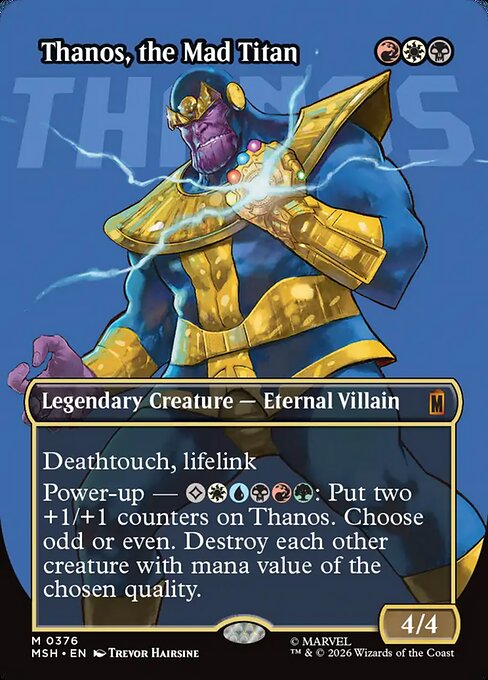
This thanos mad titan commander guide exists because nobody at your table has agreed on what deck he's supposed to be yet, and the card itself is the reason why. Read the mana cost. {R}{W}{B}. Three mana, Mardu, a 4/4 with deathtouch and lifelink that trades with anything and gains you life doing it. That's the declaration on the front of the card. Then you read the Power-up line, the one with six mana symbols crammed into it: {C}{W}{U}{B}{R}{G}. Suddenly his color identity is all five colors, because that's how color identity works, it doesn't care that the ability is a one-time miracle you might never cast. It just counts the pips.
So you've got a card that plays like a Mardu beatstick and builds like a five-color pile. That split is not a bug you work around. That split is the entire deck. Barely anyone has settled on the right shape for him yet, and every list I've seen argues with itself about whether it's actually trying to hard-cast that Power-up ability or just happy to have deathtouch and lifelink stapled to a three-drop. Both are correct answers. That's where the disagreement starts.
The Plan: Snap the Board or Swing With Deathtouch?
Building Thanos, the Mad Titan comes down to three plans.
The Beatstick Plan casts Thanos on curve, swings with deathtouch and lifelink like it's a slightly evil Ares, God of War, and treats Power-up as a nice surprise if you ever scrape together six colors of mana in one turn. The Snap Plan builds the five-color fixing to actually pay {C}{W}{U}{B}{R}{G} more than once, usually with blink effects doing the heavy lifting, and treats the odd/even sweep as the actual engine. The Henchman Plan barely cares about Power-up at all. It builds a Villain tribal shell where Thanos is just an efficient body riding on top of card draw and go-wide pressure.
Win conditions cluster into three lanes: combat damage from an unkillable beater, a repeatable one-sided board wipe, and Villain swarm value that just grinds a table down. Pick a lane before you build. This deck punishes indecision.
The Five-Color Ramp Package
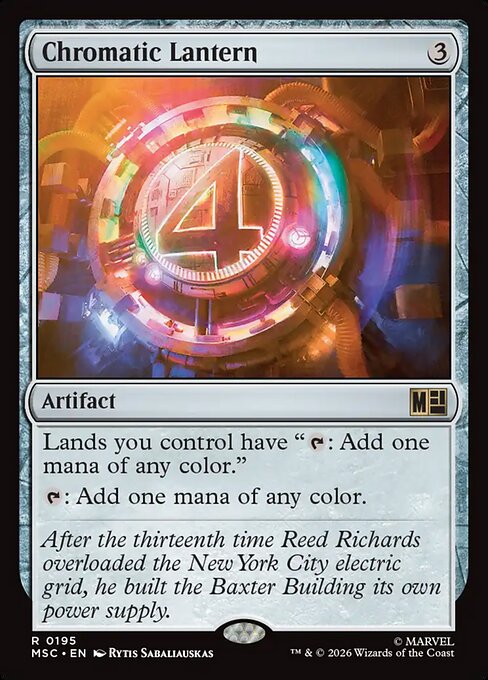
Here's the tax you pay for wanting that board wipe more than once a game. {C}{W}{U}{B}{R}{G} is not a cost you back into with a stack of Swamps and a prayer. You need real fixing, and in this thanos commander deck the fixing is doing more strategic work than the kill spells you're holding. Chromatic Lantern turns your whole manabase into a rainbow the turn it lands, which matters more here than in almost any other deck you'll build. Exotic Orchard is a bet that your opponents are running greedy manabases too, and in a five-color pod that bet usually pays off. Mana Confluence just says yes to every color for one life a pop, and one life a pop is nothing next to the ceiling of resetting Power-up. Delighted Halfling as colorless ramp and, since Thanos is legendary, as protected, uncounterable acceleration into your commander on curve.
Rocks are static. Bloom Tender and Faeburrow Elder aren't. Both scale with the colors already on your board, which means the more of this five-color spread you assemble, the better they get. The dork advantage over the rock comes down to growth: rocks tap for what they tap for on day one and never grow up.
The Villain Tribal Engine
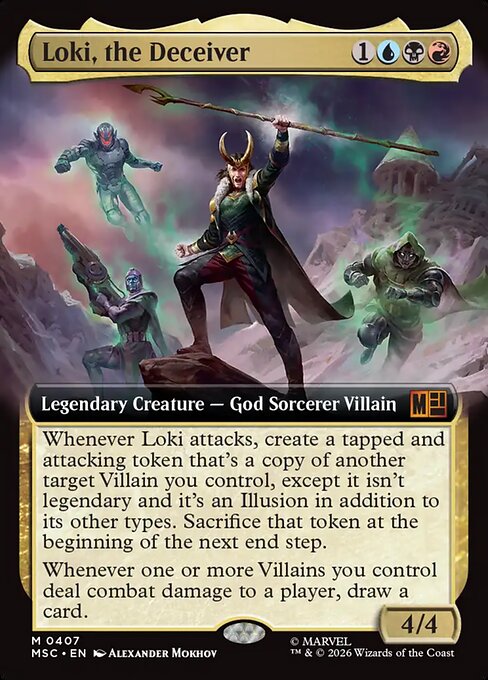
This lane barely needs Power-up at all, and that's the whole pitch. Build the Henchman Plan right and Thanos is just an excellent deathtouch, lifelink body sitting on top of a value engine that was already winning the game before he swung once. Loki, the Deceiver anchors the plan. Whenever he attacks, he creates a tapped, attacking token copy of another target Villain you control, an Illusion that isn't legendary and gets sacrificed at the next end step, and he draws you a card whenever your Villains connect. It's the kind of invisible value that never shows up on a threat assessment until it's too late. I've watched a Henchman-style table swing for lethal on turn eight with three Villains and a menace token army, no mass removal spell required, no fanfare, just a quiet pile of damage that snuck past a pod still worried about someone else's combo.
Baron Strucker, HYDRA Overlord discounts your Villain spells and lets one entering Villain connive for free each turn, which keeps the curve low and the hand quality high. Doctor Octopus, Master Planner pumps every other Villain and, at your end step, draws you back up to your increased maximum hand size of eight whenever you've fallen below it, not a guaranteed card every turn, but a steady refill. M.O.D.O.K. flies over blockers, gains life, and pays life to filter your draws into counters. Tombstone, Career Criminal is the actual rebuy piece here, returning a Villain card from the graveyard to your hand the moment it enters. This is tribal villainy at its most literal: a lower curve, more bodies, and Thanos as the biggest, meanest henchman in the room instead of the whole plan.
The Removal Suite
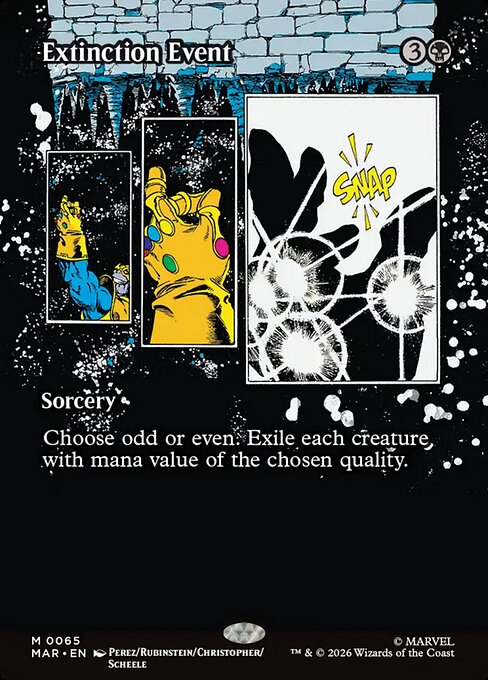
Thanos already has a parity gimmick built into his card, so lean into it instead of fighting it. Extinction Event fits the plan: pick odd or even, then exile instead of destroy, which sidesteps indestructible entirely. Alternate your choice from game to game, odd one sitting, even the next, so the table never gets to build around a fixed answer.
Toxic Deluge scales with however much life you're willing to pay, which in a lifelink deck is more forgiving than it looks. Blasphemous Act gets cheaper the more creatures are on the battlefield, which in a five-color pile of Villains and blockers usually means it's a two or three mana Wrath by the time you actually need it, and its damage-based wipe is the one Heroic Intervention actually stops cold. Chaos Warp is your answer to the one permanent none of your sweepers touch: an artifact, an enchantment, a planeswalker, whatever's making your life difficult that turn.
Interaction and Protection
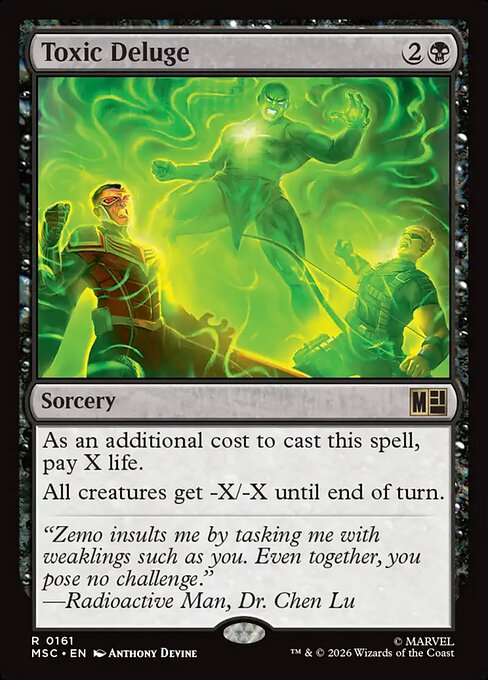
Thanos's Power-up ability spares him by name, "destroy each OTHER creature," so his own wipes never touch him. Your other board wipes don't know that courtesy. Toxic Deluge for a big enough X kills your own 4/4 just as dead as anyone else's board, and Blasphemous Act doesn't check whose creature it is before dealing 13. Nobody warns you about this part: your own sweepers become a friendly fire risk on the one creature the whole deck is built around.
Heroic Intervention blankets your whole board in hexproof and indestructible for two mana, and that covers Thanos against the sweepers that actually destroy him, including the lethal damage from Blasphemous Act, since indestructible stops a creature from dying to damage or a destroy effect alike. It does nothing for him against Extinction Event, which exiles instead of destroying, and a large enough X on Toxic Deluge still drops his toughness to zero and kills him outright, indestructible or not. Hexproof and indestructible aren't a blanket answer here, know which wipes they actually stop before you bet the game on them. Flawless Maneuver is free if you control a commander, and you do, so there's no excuse not to run it. Swiftfoot Boots and Lightning Greaves keep him alive against targeted removal and let him attack the turn he's equipped. Run at least one of these. A critical lack of protection here means your commander eats his own sweeper and you spend the rest of the game explaining yourself.
Blink Loops: How to Make Thanos Free (and Repeatable)
Here's the actual trick, the one half the Thanos decks out there are quietly built around. Power-up costs {C}{W}{U}{B}{R}{G} in full, but the card tells you to reduce that cost by his own mana cost if he entered the battlefield this turn. His mana cost is {R}{W}{B}. Strip those pips out of the full cost and you're left paying {C}{U}{G}, three mana, for a mass removal effect that wipes the board. The catch is that discount only applies the turn he enters, and the ability only activates once per object.
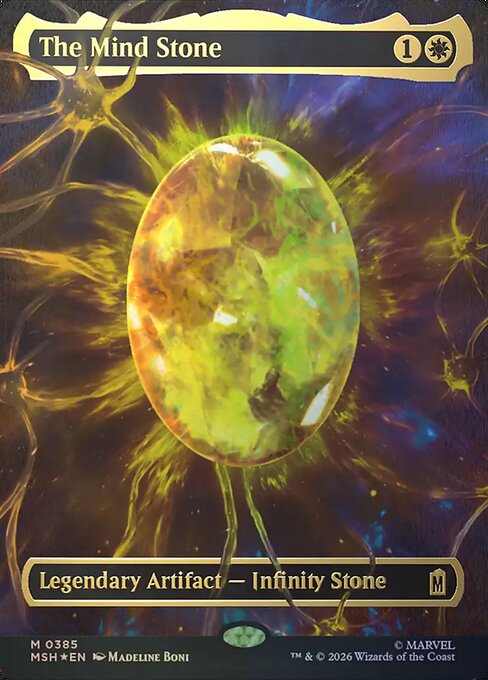
Blink him and both restrictions reset. A new object has never activated Power-up before, and it just entered the battlefield, so the discount window is open again. Conjurer's Closet does this every single end step for free once it's online. Ephemerate does it twice off one card thanks to its rebound trigger. The Mind Stone eventually harnesses into the same loop, exiling and returning Thanos just like Conjurer's Closet does. The Soul Stone is a different tool entirely: it returns a creature card from your graveyard to the battlefield each upkeep, so it only helps Thanos after he's actually died, bringing him back from the graveyard rather than resetting his discount mid-game. Treat it as recursion insurance for after a bad trade, not as part of the repeatable blink loop. I've had a Conjurer's Closet loop reset Power-up two turns running and clear eleven creatures off two different boards before anyone found an answer. That's cinema. Build your own board to survive parity destruction first, though, or you're wiping your own team along with theirs.
How to Build It: Blink Engine, Villain Tribal, or Ramp Beater
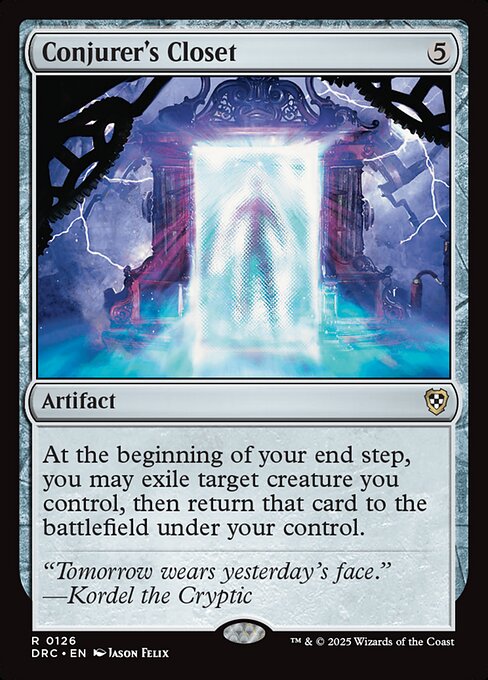
Three builds, three different decks wearing the same commander. The blink engine wants a controlling shell: Conjurer's Closet, Ephemerate, and heavy five-color fixing, plus permanents that don't mind being sacrificed or exiled repeatedly since you're resetting things constantly. This is the highest ceiling build and also the hardest to pilot, because you're threading blink timing and parity choices every single turn. The Villain-heavy build wants a lower curve and more bodies. Loki, the Deceiver does the connecting work here: whenever he attacks, he creates a tapped, attacking token copy of another Villain you control (not legendary, an Illusion on top of its other types), sacrificed at the next end step, while Power-up sits as a bonus you might never even activate. This is the build that wins the most boring, reliable way: combat damage and card advantage, no six-color miracle required. The ramp beater is the budget option and the easiest to pilot with your whole chest: Chromatic Lantern and Delighted Halfling get you to Thanos, you cast him, you swing, and if you ever assemble the full rainbow you get a bonus mass-removal trigger. Lowest complexity, lowest ceiling, still perfectly playable at a casual table.
The Verdict: Is Thanos, the Mad Titan Worth Building?
Run this if you like solving unsolved brews. That's not a knock. It's the actual appeal of a thanos edh build right now: there's no established list to copy, no consensus 99 to net-deck, just a card with a split personality and a format still arguing about which half matters more. If you want a commander with a proven, copy-paste shell you can sleeve up this weekend, skip him. He'll frustrate you. The floor here is genuinely fine: a deathtouch, lifelink beater in five colors that occasionally does something absurd. The ceiling is a resettable, one-sided board wipe that keeps coming back no matter how many times the table answers it. Thanos was never lying to you about which deck he wanted to be. He just told you in two different card frames at once, and building him means picking which frame you believe.