

What Does Niv-Mizzet, Ghost Counsel Actually Do?
At first glance this looks like a cute lifegain payoff. A six-mana flying dragon that turns your life total into cards sounds like the kind of card that wins a kitchen-table game of attrition and nothing else. Give it two more sentences before you file it there, because this is a Niv-Mizzet Ghost Counsel commander guide, and the honest version of this card is that it's a stoppable-at-will infinite draw engine wearing a lifegain costume, and the Commander community figured that out almost immediately. This dragon is already sitting in thousands of decks within days of release, which tells you the "overrated six-drop" read never had legs to begin with.
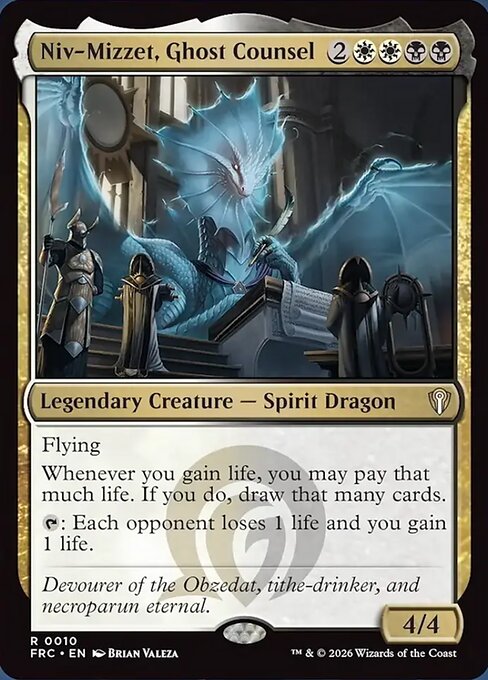
Strip away the hype and read the card like a judge would. Niv-Mizzet, Ghost Counsel is a 4/4 flyer for {2}{W}{W}{B}{B}. Its first ability is a triggered ability, not a replacement effect: whenever you gain life, you may pay that much life to draw that many cards. The life has to actually land first, and the conversion is optional every single time, which matters more than it sounds. The tap ability is a repeatable Sanguine Bond-flavored drain, one life each way, no mana cost, every turn it's untapped. The original Izzet dragons ask something different of you: Niv-Mizzet, the Firemind rewards drawing cards in general, pinging a target every time one lands, while Niv-Mizzet, Parun rewards chaining instants and sorceries specifically. This one hands the archetype to Orzhov instead, trading spell-slinging for the format's best removal and the deepest lifegain support in the game.
The Plan: Turn Lifegain Into Cards, Then Cards Into More Life
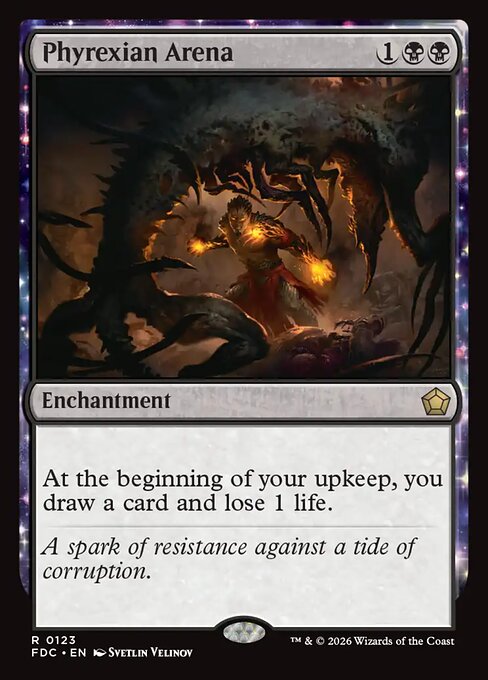
The loop sounds almost too simple to be a deckbuilding plan: gain life, pay life, draw cards, repeat. Early turns look like any other Orzhov midrange deck, you're deploying one-mana lifegain creatures and letting them trickle in free cards here and there. By the midgame, Niv-Mizzet's tap ability drains an opponent and nets you a single point of life, and that triggers the pay-life-to-draw ability, so the life you just gained goes right back out the door as a card. Run that every turn it survives and you've got a free Phyrexian Arena that never costs you anything beyond the life you were going to spend anyway. That's the floor, and the floor is already good.
The ceiling is where this orzhov commander gets interesting. Once you've stacked enough lifegain volume on the battlefield, a single attack step or a single activation can trigger multiple payoffs at once, and suddenly you're drawing three or four cards off one swing instead of one. From there the deck branches into whichever win condition you've built toward: drain finishers that convert gained life directly into opponents' life loss, go-wide lifelink boards where every blocker that connects fires the engine again, or the genuine infinite-draw combo lines buried in this list. None of those are mutually exclusive. A well-built Niv-Mizzet Ghost Counsel deck usually runs all three as redundant backup plans.
Draw Engines: Redundant Copies of the Same Good Idea
A one-card engine is a liability. If your whole plan dies to a single Swords to Plowshares on the commander, you don't have a deck, you have a prayer. This is why the smart build stacks multiple copies of "gain life, draw cards" so the plan survives Niv-Mizzet, Ghost Counsel getting answered.
Well of Lost Dreams is the best of these because it decouples the cost from life: you pay mana instead, and you can choose any X up to the life you gained, which means you can draw fewer cards and bank the rest as life instead of being all-or-nothing. Dawn of Hope asks for two generic mana per draw but also builds you a stream of lifelink tokens to keep the life total climbing. Venser's Journal removes your maximum hand size and turns every card you're hoarding into life at your upkeep, feeding the whole system back into itself. And Doctor Doom, Unrivaled is the sleeper here: a lifelink body that draws a card and loses a life on a tap, functioning as a second draw engine that doesn't even need a lifegain trigger to work, while quietly setting up the deck's most explosive finish.
The Lifegain Package: Volume Over Big Swings
Forget Chaplain's Blessing-sized bursts. This deck doesn't want one chunk of ten life, it wants ten separate chunks of one life, because every separate increase is a separate trigger on the payoffs below. Soul Warden fires on every creature that enters, yours or anyone else's, and Soul's Attendant gives you the option to do the same, which in a multiplayer pod means these triggers are piling up constantly without you doing anything.
Authority of the Consuls and Kambal, Consul of Allocation tax your opponents' own actions into life totals for you, so you're generating triggers on their turns too. Blind Obedience's extort does the same thing on your own spells for a mana you were probably going to leave up anyway. Then the payoffs that actually grow your board: Archangel of Thune puts a +1/+1 counter on every creature you control each time you gain life, turning a wide lifelink board into an avalanche, while Heliod, Sun-Crowned only grows one target creature or enchantment per trigger, which is still real value, just narrower. Stack enough lifelink bodies under Archangel and combat damage starts generating its own lifegain triggers on top of the damage itself.

Your Win Conditions: Draining the Table to Zero
Combat damage is not the plan here, it's a bonus. The actual kill switch is the stack of "whenever you gain life, an opponent loses life" enchantments and creatures that turn your value engine into a clock nobody sees coming. Vito, Thorn of the Dusk Rose, Sanguine Bond, and Defiant Bloodlord all scale one-for-one: target opponent loses exactly as much life as you gained. Cliffhaven Vampire and Marauding Blight-Priest are flatter, a guaranteed single point of drain per trigger no matter how big the lifegain event was, which still adds up fast when triggers are firing three or four times a turn.
Here's the scenario: a Soul Warden trigger and a commander activation net you two life on an otherwise quiet turn. With just two of these scaling drainers on the battlefield, that one turn becomes four damage spread across the table, invisible until it isn't. Stack three and the same two-life turn becomes six. Nobody blocks for this because nobody's tracking life gain as a damage source until they're at zero.

Combo Lines to Know: Sheoldred, Doctor Doom, and the Mill-Yourself Loop
This is the part that turns "is Niv-Mizzet Ghost Counsel good" into "how fast do you want to win." Sheoldred, the Apocalypse gains you 2 life whenever you draw a card. Put that next to Sheoldred's triggered ability and you've got a loop: draw a card, gain 2 life, optionally pay that 2 life to draw 2 more, each of which adds 2 more life. Because the payment is optional every single time, you can stop whenever you want, there's no deck-out risk unless you choose to keep going.
Words of Worship is the cheap trick that makes this absurd: the enchantment costs {2}{W} to cast, but once it's down, paying just {1} turns your next draw into 5 life instead, then the commander converts that 5 life into 5 fresh draws. A three-mana Onslaught-era rare becomes a repeatable draw spell. When you do want to push the loop to its end, Doctor Doom, Unrivaled is the designated kill switch, activate its tap ability once your library is empty and it wins the game on the spot. Veinwitch Coven lets you pay {B} whenever your life total goes up to return a creature card from your graveyard to your hand, while Starscape Cleric just adds another cheap flying drain trigger to the pile.

How to Build It: Kitchen-Table Value vs. cEDH-Adjacent Combo
The casual version of this Niv-Mizzet Ghost Counsel deck is almost entirely stock Orzhov lifegain: Soul Warden and friends, drain payoffs, Niv-Mizzet doing its thing every turn without anyone at the table needing to reach for a counterspell. You never touch the combo pieces, and you still win, just slower and with fewer hard feelings.
The higher-power build cuts a chunk of those small creatures and specifically assembles Sheoldred, the Apocalypse and Words of Worship, then backs them with tutors to find the pieces and protection to keep the commander alive long enough to use them. Doctor Doom, Unrivaled moves from "nice backup draw" to "the actual plan." You're trading breadth for a consistent turn where you just win the game outright.

The Verdict: Is Niv-Mizzet, Ghost Counsel Good in Commander?
The "overrated six-drop" premise doesn't survive contact with the card. Lifegain fans, Orzhov loyalists, and anyone who wants a low-maintenance engine that doesn't need the rest of the 99 to cooperate should build this without hesitation.
If you want a fast clock, or you genuinely dislike the idea of a table watching you draw your own deck for fun, this isn't your commander. But the floor-to-ceiling spread here is the real selling point: the floor is a free card every turn you have it untapped, and the ceiling is an actual combo kill. Whether you build toward one end or the other is a real fork, not a false one, and both answers are correct.
