
Reality Fracture Is Built for Commander, Not Standard
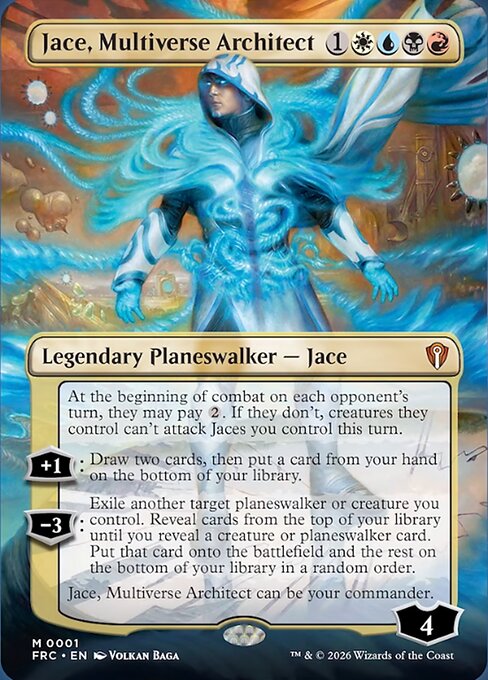
Every set gets the "great for Commander" line in its marketing copy. This release is the rare set where the early reviews actually back it up, and where the same reviewers shrug at what it does for Draft and Standard. That split is unusual. Normally a set's best Commander cards are just its best Constructed cards wearing a bigger hat. Here, the two lanes have almost nothing to do with each other: the Limited environment is getting dinged for a convoluted Prepare mechanic and murky archetype signposting, while the Commander-specific suite is drawing comparisons to some of the strongest EDH-focused releases in years.
Jace, Multiverse Architect is the clearest evidence. A four-color legendary planeswalker that can lead its own deck, its passive dares every opponent to pay two mana at the start of combat just to keep their creatures able to attack Jaces at all, and its -3 works as a polymorph effect, exiling a planeswalker or creature you control and digging until it hits a creature or planeswalker card to replace it. That's precon-box design, built to be a commander first and a Constructed inclusion never. Aerid Konstrari, meanwhile, spins up a self-sustaining resource engine out of a 5/4 flying body that most Standard decks will never look twice at.
One quick housekeeping note before the deep dive: this coverage is built on spoiler-season card text ahead of the October 2, 2026 release, and Wizards has room to errata wording or fix corner cases before then. Treat exact numbers as very likely, not gospel.
Empower Jace: A Planeswalker Subtheme With Real Legs
Empower Jace is amass for planeswalkers, and once you see it that way the whole subtheme clicks. Any card with the ability either grows a Jace planeswalker token you already control or creates one from scratch with "-1: Surveil 1" and "-3: Draw a card" stapled on. Jace, Multiverse Architect doesn't generate the tokens itself, but it's the commander that wants a battlefield full of small permanents to feed its polymorph -3, and these tokens count.
The real engine pieces are cheap and repeatable. Academic Ascent is a one-mana-cheaper-than-it-looks combat trick that also empowers Jace 2 every time you cast it. Avatar of Burgeoning Echoes triggers whenever a land you control enters, empowering Jace 2, and once you're stacking planeswalker tokens, it hands your whole planeswalker suite a -10 finisher scaled to your land count. Sanctum Lurker is the glue: it stops your Jace tokens from dying to 0 loyalty and gives every planeswalker you control a repeatable damage-and-drain ability, turning a pile of fragile tokens into a real clock. The Theorist, Jace Beleren isn't an empower payoff itself, but it's another Jace on the battlefield drawing you cards every opponent's draw step, which stacks the deck's identity even further into "yes, we really are doing this."
Heartwood Tokens: Ramp That Feeds Artifact Synergies
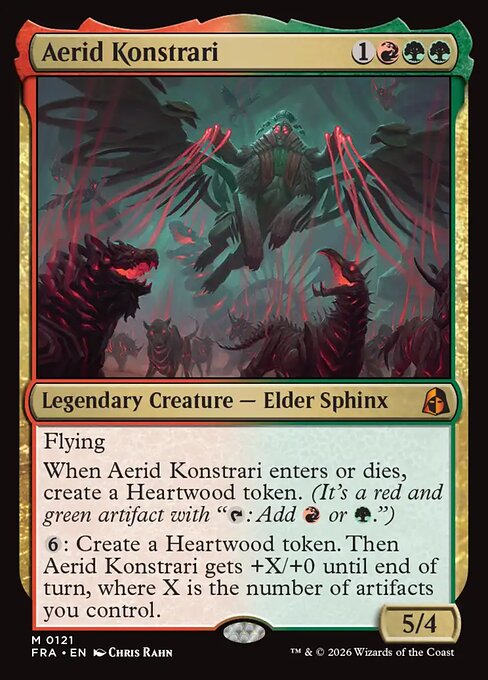
Heartwood tokens are the set's new predefined token, and they solve the two biggest complaints about mana dorks in one card: fragility to sorcery-speed removal and doing nothing once they're gone. Each one is a red-green artifact that taps for red or green, and Aerid Konstrari makes one when it enters and another when it dies, which means removal doesn't actually set you back on mana. That's the missing piece an artifact-ramp Gruul deck has needed.
The upside is that Heartwood tokens are artifacts, not throwaway mana abilities, so they feed everything in the shell that counts artifacts. Craterclaw Colossus enters with haste and hands your creatures trample plus a power boost equal to your artifact count, and a battlefield with three or four of them sitting around turns that into a real alpha strike out of nowhere. Konstrari's own {6} activated ability doubles down, making another token and pumping itself by an equal artifact count. Once you're two or three tokens deep, that ability starts looking less like a mana sink and more like a finisher.
Prepare Returns, and Bloodline Recollector Is the Breakout Star
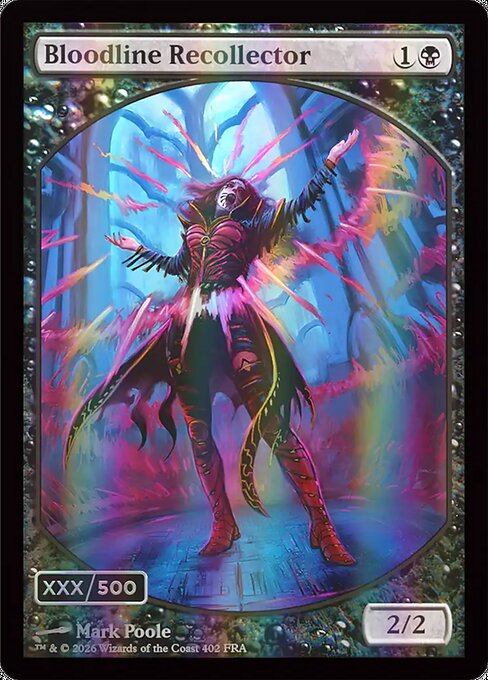
Prepare is back from Strixhaven with a twist: instead of every creature getting its own bespoke prepare spell, several Hexhaven students share one. The card actually worth building a deck around is Bloodline Recollector.
Its condition sounds narrow on paper, three or more creatures dying in a turn, but any aristocrats shell clears that bar without trying, and once it does, you get to cast a copy of Ancestral Craving: draw three, lose three life, for a single black mana. That's an absurd rate off a 2/2 you were already running, and it's repeatable every time you clear the death threshold again. Edgar, Ancient Bloodlord and Liliana the Repentant both want the same thing Bloodline Recollector wants: bodies hitting the graveyard. Edgar turns those deaths into life and, eventually, into a menace-wielding counter engine, while Liliana mills two cards whenever another creature or planeswalker you control enters, stocking your yard for her own exhaust reanimation later.
The Elder Sphinx Cycle Is the Set's Real Commander Chase
Five ally-color Elder Sphinxes headline this set's rares and mythics, and they're clearly designed as a cycle, not five unrelated bombs. Ranking them matters, because the power gap between the best and worst is real.
Aerid Konstrari sits at the top. A resilient mana engine wrapped in a 5/4 flying body that punishes removal by replacing itself is exactly the kind of card that fits into a huge swath of Gruul Commander decks without any extra buy-in. Ingris Stingerquill is close behind: every attacker you control pings each opponent for 1, which turns a wide board into a burn spell and scales absurdly with token generators. Kwia Vigorbloom converts lifegain into a one-shot Lotus token worth three mana of any color, which is a great way to smooth your curve in a Selesnya lifegain shell, though the once-per-turn clause keeps it from spiraling. Denzilore Fatehold is the build-around of the group. A flash flying 3/4 that puts a +1/+1 counter on your whole team every time you scry or surveil is filthy in a deck stacked with your own scry and surveil effects, and does almost nothing anywhere else. Uldaros Theorix closes out the cycle, and it's the weakest by a clear margin. Casting spell copies for free out of your graveyard sounds great until you notice it only fires if you cast Theorix yourself, and the mana value ceiling of 6 caps the payoff hard relative to what the other four sphinxes are doing for that slot.
The Echoverse Planeswalkers Reinvent Familiar Faces
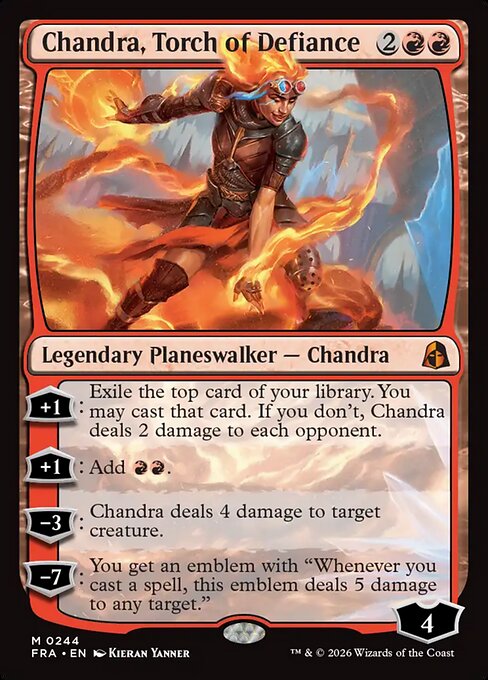
Reality Fracture's story gimmick, splitting familiar planeswalkers into color-shifted Echoverse doubles, actually pays off at the table because each pair supports a genuinely different game plan instead of just being a reskin. Chandra, Torch of Defiance is the aggressive red mirror everyone already knows: extra cards or damage off the first ability, ramp off the second, four damage to a creature off the -3. Chandra, Chill of Compliance is her Echoverse opposite, a blue control piece that surveils for value, taps down and stuns problem permanents with -X, and eventually hands you a "draw a card whenever you cast a spell" emblem. Same character, completely different deck.
Jace, Multiverse Architect gets the commander slot proper, running a four-color pillowfort plan built around protecting itself and cheating creatures into play. The Theorist, Jace Beleren is the mono-blue version, punishing every opponent's draw step with a free card for you and offering a mass-pump ultimate that scales with your hand size. Ajani Unrelenting rounds out the loyalty-spam side of the theme: every activated loyalty ability, yours, spits out a 2/2 Wizard Soldier token, which turns his -2 hand-refill and -3 ability, which blasts every creature but spares your own tokens, into token factories on top of their normal jobs. His Echoverse counterpart, Ajani Resolute, goes the other way entirely, turning lifegain into loyalty growth instead of token spam.
Aristocrats and Lifegain Get New Commander Glue
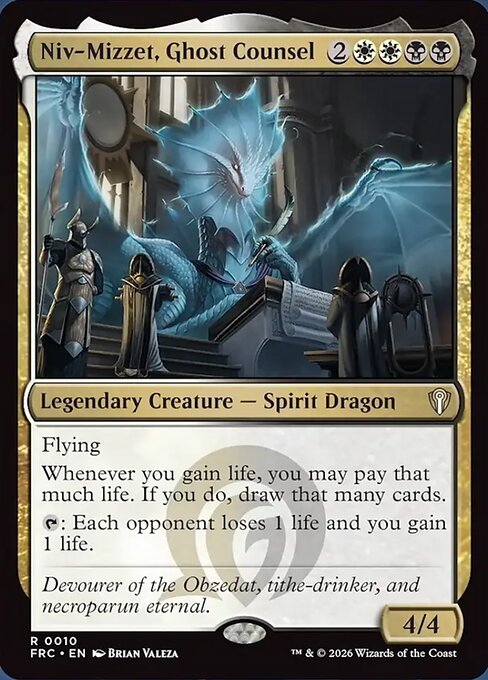
What's genuinely impressive about Reality Fracture's Commander suite is how the aristocrats and lifegain pieces interlock instead of just coexisting in the same box. Edgar, Ancient Bloodlord gains you a life every time another creature or planeswalker you control dies, and can sacrifice those creatures and planeswalkers to grow into a menace threat. Liliana the Repentant mills instead of gaining life on those ETBs, stocking a graveyard for her own reanimation ability later, which pairs neatly with Edgar's own death triggers in the same shell.
Niv-Mizzet, Ghost Counsel is the payoff that turns all of that incidental lifegain into extra cards drawn: whenever you gain life, you can pay that much life to draw that many cards, and its tap ability drains each opponent for a point of life every turn to keep the engine fed. Stack Edgar's death triggers under a Niv-Mizzet and you're drawing extra cards most turns without spending a single card to do it. Bloodline Recollector fits that shell just as well, rewarding the turns your aristocrats package goes wide and starts trading creatures away three and four at a time.
The Commander-Deck Exclusives Are Legacy/Vintage Legal Bombs
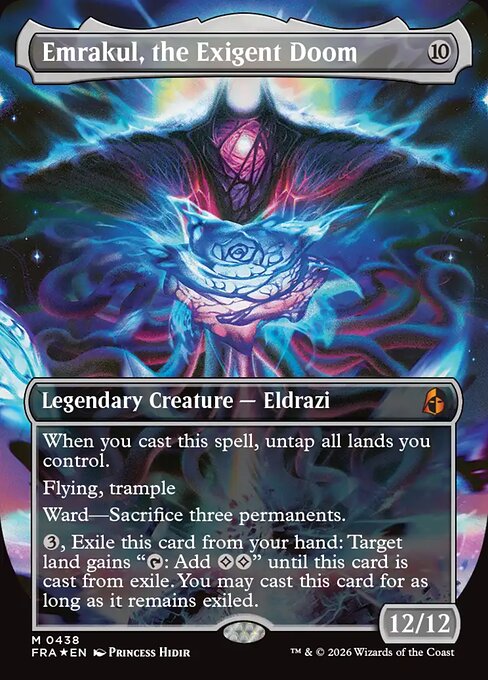
There's real confusion brewing around the FRC-stamped cards from the Commander decks, so let's clear it up: these cards are legal in Commander, Legacy, and Vintage, even though they never touch Standard, Pioneer, or Modern. That's not a downgrade. It just means you shouldn't expect to see them at your local Standard night, and you shouldn't need to.
Niv-Mizzet, Ghost Counsel and Dack Fayden, Helping Hand are the two headline exclusives. Dack's ETB digs through your library until it hits enough creatures for every opponent, puts those creatures onto the battlefield goaded, and then hands each one to a different opponent, so you get the value of a library-toolbox spell while your opponents inherit the bodies and the obligation to attack with them. Emrakul, the Exigent Doom is the format's new colorless finisher: untapping all your lands when you cast it, and if you can't afford the full ten mana yet, you can exile it from hand for {3} to make a land tap for double colorless until you're ready. Teferi's Reproach is a one-sided time-out button, phasing out one opponent's nonland permanents and freezing their life total until their next turn (they keep their lands and can still develop mana, but their creatures and artifacts are gone for a turn), which is the kind of tempo swing that wins combat math arguments before they start. Ghalta the Unstoppable gets cheaper based on the power of your biggest creature and hands the rest of your creatures trample, while its Echoverse pair Ghalta the Immovable runs that math off toughness instead of power. Loot, the Nexus rounds things out as a mana dork that scales with how many different power values your creatures have, which rewards exactly the kind of oddball creature base a five-color or big-mana Commander deck tends to run anyway.
Format Impact: A Commander-First Set That Skips Constructed
Here's the verdict: Reality Fracture is a strong Commander release and a forgettable Constructed one, and Wizards clearly knew that going in. The Elder Sphinx cycle and the Empower Jace token subtheme are the two subthemes most players will actually build around, and Aerid Konstrari and Jace, Multiverse Architect are the two commanders most likely to headline actual decklists once the set is in players' hands.
If you already run an aristocrats deck, Bloodline Recollector joins your list at a nearly free rate the moment your board starts trading creatures in bunches. Artifact-ramp Gruul decks get a genuine upgrade from those token generators even without building around Konstrari specifically. The Commander design is the real story. Everything else is a rounding error.