
The Board Wipe Ruling Most Tables Get Backwards
You sweep the board. Four creatures die at once, and one of them is Avacyn, Angel of Horror. Someone at the table says "her ability only triggers once, they all died together." That sentence sounds reasonable and it is completely wrong, and getting it wrong is not a trivia footnote, it changes how many creatures come back at the next end step, how much life swings on the way there, and who actually has priority to order the stack.
This misconception shows up constantly with simultaneous death triggers in commander, and sweepers are where it does the most damage. Run Blasphemous Act into a board with Avacyn and three other nontoken creatures you control, and the question of "one trigger or four" is the difference between getting back one card and getting back a full board. Most tables resolve this by feel instead of by rule, and feel is losing them games.
Quick Answer
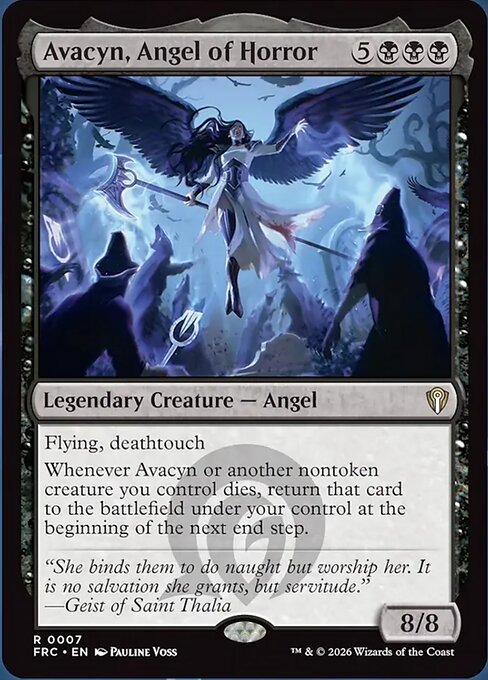
Here's how simultaneous death triggers resolve in commander: they use CR 603.10a's look-back-in-time principle, so a sweeper that kills four creatures with a "whenever a creature dies" ability generates four separate triggers, one per qualifying creature, not one combined trigger. The only exception is an ability specifically worded as "whenever one or more creatures die," which fires exactly once no matter how many were destroyed. Each player orders their own simultaneous triggers, and those triggers go on the stack in active-player, non-active-player (APNAP) order, which means they resolve in the opposite order, non-active players' triggers resolve first, then the active player's go last. Avacyn, Angel of Horror's own printed ruling confirms the per-creature standard directly.
Avacyn, Angel of Horror and the Per-Creature Ruling
Take the exact scenario: you control Avacyn, Angel of Horror and three other nontoken creatures, and an opponent casts Blasphemous Act, which deals 13 damage to each creature. All four die in the same state-based action check. Avacyn's printed ruling settles the count directly: "If Avacyn dies at the same time as another nontoken creature, her ability will trigger for each of them." That's not "the ability triggers", it's "for each of them." Four creatures, four triggers, each one independently returning its own card to play at the beginning of the next end step.
This works because of the look-back-in-time mechanism in CR 603.10a. Leaves-the-battlefield triggers don't check the board state after the wipe resolves, by then, everything's in the graveyard and there's nothing left to look at. Instead, the game rewinds and checks each creature's existence immediately before the event. Avacyn existed, triggered for herself; each other creature existed, triggered independently for that creature. The full rules literally use this exact setup, an artifact with "whenever a creature dies, gain 1 life" killed alongside two creatures by a single sweeper, as their own worked example, and it triggers twice, not once.
Per-Creature Triggers vs. Whole-Event Triggers
The whole dispute comes down to one word in the trigger condition, and you can check it in about two seconds. Blood Artist, Zulaport Cutthroat, and Syr Konrad, the Grim all trigger per creature: each one fires whenever a creature dies, not once per mass-death event. Feed five creatures into Blasphemous Act with Blood Artist in play, and that's five separate triggers, five separate instances of "target player loses 1 life and you gain 1 life," not one. Same board, Zulaport Cutthroat: five opponents-lose-1-you-gain-1 triggers, stacked and resolved individually. Syr Konrad doesn't even need creatures under your control; it fires for every creature that perishes anywhere, so a five-creature sweeper means five pings to each opponent.
Compare that to wording like "whenever one or more creatures die," which some other cards use, that phrasing exists specifically to collapse a mass-death event into a single trigger regardless of how many creatures were involved. None of the cards above use that wording. If you're playing Blood Artist and a sweeper kills five creatures, you drain five life, not one. Miscounting this in either direction changes life totals by four or more points on a single sweeper, which at a commander table is often the entire margin between stabilizing and dying next turn.

The Failure Mode: Miscounting Triggers at the Table
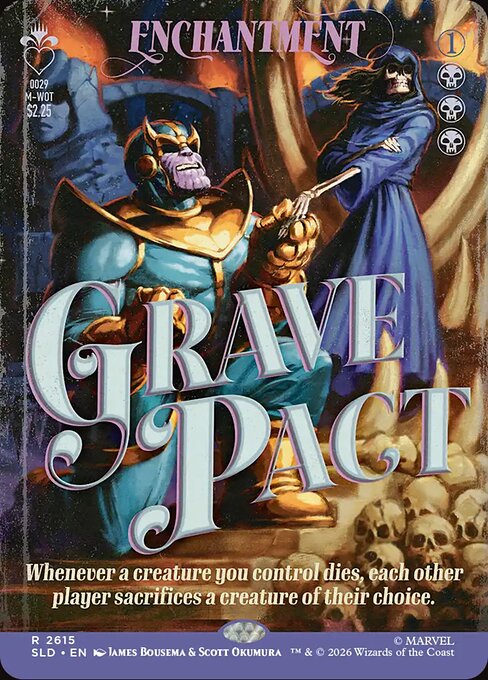
Here's where this actually costs games. A player has Grave Pact in play alongside four of their own creatures, and a sweeper kills all four. Grave Pact reads "whenever a creature you control dies, each other player sacrifices a creature of their choice", per-creature wording, so that's four separate edicts, one per dead creature, hitting every opponent four separate times. Tables regularly flatten this into a single "okay, everyone sac one creature" and move on, and that error undercounts three forced sacrifices per opponent. If the pod has Teysa Karlov on the battlefield instead, the failure mode flips: players remember Teysa doubles triggers but forget she doubles each individual trigger, not the event as a whole, so four dying creatures under a Grave Pact plus Teysa isn't eight triggers total, it's four Grave Pact triggers, each one doubled, for eight edicts, and skipping that math shortchanges the table by four sacrifices.
Massacre Girl compounds the confusion because her own ability triggers off every creature that dies during her wipe, cascading -1/-1 effects that kill more creatures, which then triggers more death payoffs, sort it out per-creature or the whole sequence falls apart at the table.
Living Death: The Counterintuitive Case Hiding Inside One Spell
Most players read Living Death and assume zero death triggers fire, because the mental model is "reanimation spell, creatures never really left." That model is wrong, and it's wrong in a way that costs opponents life every single time the spell resolves. Living Death doesn't work as one atomic swap. It resolves as three sequential internal steps: every player exiles all creature cards from their graveyard, then every player sacrifices all creatures they control, then everyone puts the exiled cards back into play. That middle step, the sacrifice, is a full, simultaneous mass-death event, governed by the exact same CR 603.10a rule as any sweeper, it just doesn't put any triggers on the stack until the whole spell is done resolving.
That means if you control Blood Artist or Zulaport Cutthroat and you sacrifice four creatures to Living Death, those abilities fire four separate times apiece, counted off the creatures that died. But Living Death doesn't stop to let any triggers happen until the whole spell is finished, so the drain doesn't actually hit until after the exiled creatures are already sitting back on the battlefield. Your opponents still lose four life to Blood Artist and you still gain four, the count doesn't change, it just lands once the reanimated creatures are already staring back at them. Players who treat Living Death as a clean reanimation spell are leaving free damage on the table or, worse, getting blindsided by it from across the table.

Exile Breaks the Chain: Farewell, Merciless Eviction, and Toxic Deluge
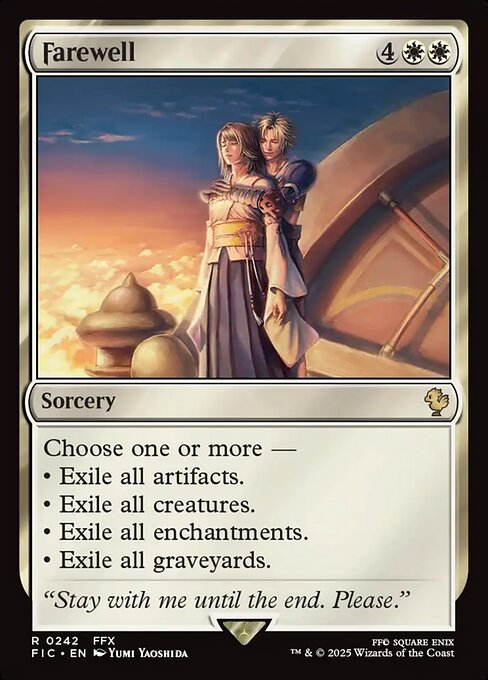
Here's the thirty-second check that ends every argument before it starts: look at whether the sweeper says "destroy," "sacrifice," or "-X/-X," or whether it says "exile." Death triggers only fire when a creature moves from play to a graveyard, that's the actual definition of "dies." Exile skips the graveyard entirely, so no dies trigger exists to fire.
Farewell and Merciless Eviction both exile permanents across multiple types, not just creatures, but when they hit creatures, those creatures leave without ever touching a graveyard. Run either one into a board full of Blood Artists and Syr Konrad, the Grims and nothing happens, zero drains, zero pings, because none of those creatures ever died in the rules sense. Toxic Deluge is the opposite case: it hands out -X/-X until end of turn, and creatures reduced to 0 toughness die normally and go to the graveyard, so every dies trigger in the format fires per-creature exactly like it would off Blasphemous Act's damage. Same logic, same graveyard destination, same per-creature count. Read the wipe before you cast it or before you panic about what it does to your board: exile silences your aristocrats pieces completely, destroy and -X/-X feed them in full.
The Bottom Line
This isn't a judgment call and it never was. CR 603.10a is the whole rule: a "whenever a creature dies" ability fires once per qualifying creature in a simultaneous event, and the game looks back in time to count each one individually. The only question worth asking at your table is "does the card say 'a creature' or does it say 'one or more creatures'?" That single word is the entire dispute, every time.
The place I see this go wrong most often isn't even sweepers, it's Living Death, because the spell's own framing tricks players into thinking nothing died. Something did. Full sacrifice event, full per-creature triggers, before anything comes back. If you're the Blood Artist or Zulaport Cutthroat player, that's free value your opponents forget to count. If you're not, it's damage you didn't see coming.
Before your next board wipe lands, read your dies-trigger wording out loud. Ten seconds of checking whether it says "a creature" or "one or more" saves you a ten-minute argument and stops the table from quietly shorting you three life, two sacrifices, or a second reanimated Avacyn, Angel of Horror.

