
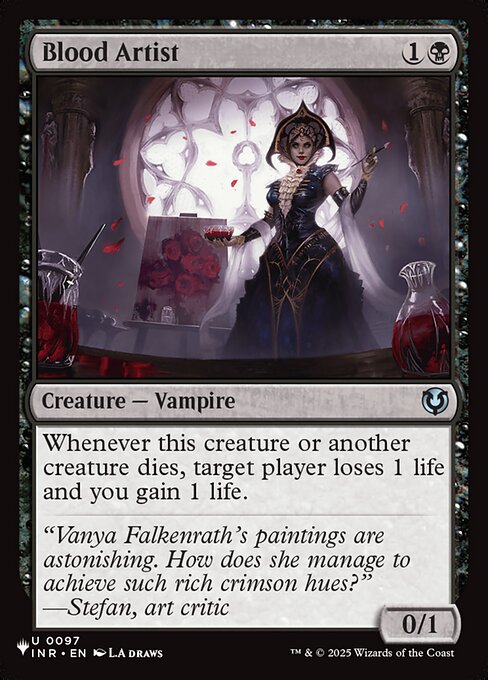
A pod argument breaks out at the worst possible moment. Three players each control a Blood Artist, a creature dies, and all three triggers fire at once. Someone at 2 life is staring down the math, certain they're fine because "I'm not the active player, so my trigger resolves first and I gain the life before the drain kills me." That instinct is exactly backwards, and it's about to cost that player the game.
This is the single most misplayed corner of triggered abilities in Commander, and it isn't a rules-nerd technicality. Understanding how triggered abilities MTG rules actually order simultaneous triggers is a life-or-death sequencing question that shows up every time a table runs multiple copies of the same drain effect, and most pods resolve it by vibes instead of by the actual rule. Acting first in the turn doesn't mean resolving first. Under APNAP, going first means putting your trigger on the stack before anyone else, and the stack works last-in-first-out. That means the active player's trigger resolves dead last. Blood Artist mirrors. Every pod has one. And every pod resolves them wrong.
Quick Answer: What Does APNAP Actually Determine?
A triggered ability fires automatically the instant its stated condition is met, no activation, no cost, no choice involved. When two or more players have triggers waiting simultaneously off the same event, APNAP (CR 101.4 and CR 603.3b) says the active player puts their trigger on the stack first, then each nonactive player follows in seating order to the left. Because the stack resolves in reverse order, that first trigger goes last, not first. This is the backbone of how triggered abilities MTG rules handle any simultaneous multi-player pileup.
What Is a Triggered Ability, Exactly? (And Why It's Not an Activated Ability)
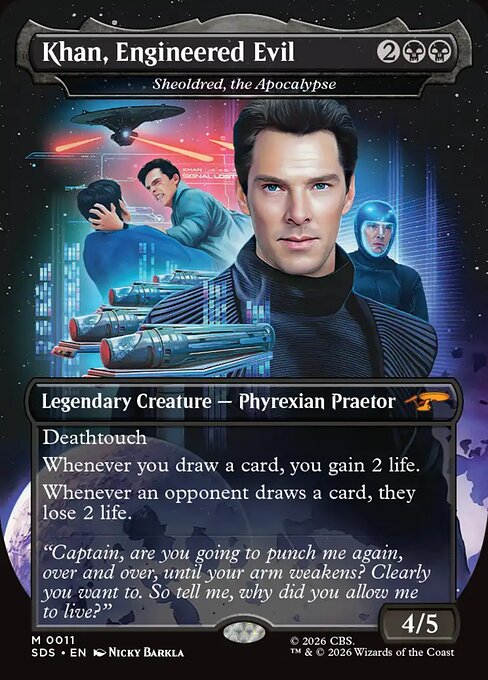
People confuse triggered and activated abilities because both look like instructions telling you to do something, but only one of them asks your permission first. A triggered ability reads "When, Whenever, or At [event], [effect]" per CR 603.1, and it hits the stack automatically the moment that event happens. Nobody chooses to trigger it. An activated ability is written as "Cost: Effect" under CR 602.1 and only shows up there when a player decides to pay for it. Sheoldred, the Apocalypse is the cleanest teaching example in the format: every time any player draws a card, either the "you gain 2 life" half or the "they lose 2 life" half fires with zero input from anyone. Nobody at the table gets to opt out or time it more favorably.
That automaticity is the setup condition for every APNAP dispute you'll ever have. Paying for an activated ability never creates simultaneous-trigger arguments, because a player chooses when to spend the cost and normal priority rules handle sequencing without controversy. Triggers force multiple players into one identical moment whether they like it or not. The entire category of dispute this article covers only exists because triggers don't ask permission.
The Blood Artist Race: Placement Order vs. Resolution Order
Here's the case that actually decides games. Three players, three copies of Blood Artist, and one creature dies in combat. All three abilities trigger off that single event, so APNAP determines placement before anyone gets priority. The player whose turn it is puts their Blood Artist trigger into the queue first, at the bottom. Moving left around the table, the next player adds theirs on top of that. The third player places theirs on top of everything else. Three drain triggers now sit stacked, and they resolve last-in-first-out.
That means the third player's trigger, the last one placed, resolves first. The trigger belonging to the player whose turn it is, placed first, resolves last of the three. Each Blood Artist trigger has its controller choose a target player who loses 1 life while that controller gains 1 life, so the order those three triggers actually resolve in can decide whether a player at 1 life survives long enough for a life-gain effect to save them, or gets picked off before their own trigger ever fires. This means the player who "goes first" in turn order is functionally always the last one to get their effect. Memorize that inversion, because it's the whole ballgame.
When It's Not a Dispute at All: One Player, Multiple Triggers
The conventional read is that any pile of simultaneous triggers is an APNAP situation. It isn't. CR 603.3b only forces an ordering algorithm across different players. When a single player controls every trigger from one event, that player decides the order however they want, and it's a strategic decision, not a rules question at all.
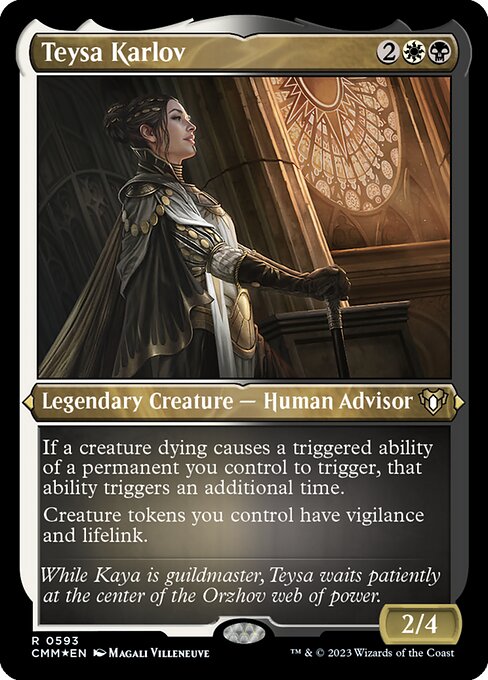
Teysa Karlov is the clearest example of this in the format, because she compounds the effect rather than complicating it. If a creature dying causes a trigger you control to fire, Teysa makes it fire an additional time, and both instances are yours to sequence however you like. That's not a dispute waiting to happen; that's a lever. Order a card-selection trigger ahead of a punishing one to see information before committing to a target, or stack every doubled damage trigger from a mass-death event in whatever sequence maximizes the kill. Confusing this single-controller freedom with the true multiplayer APNAP scenario is the second-most common source of table confusion after the Blood Artist race itself, and it's an easy tell: if only one seat controls all the triggers on the table, there's no argument to have.
The Failure Mode: Misplaying Lethal Turns Because Nobody Called APNAP
Pods don't enforce strict priority passing. Nobody's flagging APNAP when a Blood Artist trigger drains one point of life in a game where everyone's sitting at 30. The failure mode shows up exactly once it matters: a lethal race, where a player concedes or claims a win based on whatever ordering felt intuitive, and nobody at the table has the rules literacy to correct them in the moment. That's the actual danger here. It's not that APNAP is complicated, it's that it's invisible until the stakes are highest and the room is loudest.
I watched a table resolve a Sheoldred, the Apocalypse mirror at a simultaneous draw step and all three players guessed at the order instead of checking whose turn it actually was. The active player's trigger should have resolved LAST, not first, since APNAP places the active player's trigger on the stack first and the stack resolves last-in-first-out, meaning the nonactive players' life-loss triggers targeting the active player would resolve before that player's own life-gain trigger ever did. Nobody at the table worked that through in the moment, and the wrong player got drained down and conceded on bad information before anyone thought to check. A multi-Blood Artist death trigger chain causes the same confusion on a smaller scale, and Strionic Resonator adds a real wrinkle worth naming precisely. Copying a trigger with Resonator is an activated ability, paid for with mana and a tap, so it resolves under normal stack rules instead of getting threaded back through APNAP placement. Activate it in response to a trigger that's already waiting, and the copy lands on top, resolving before the triggers beneath it, active player's included. That's a real sequencing tool, not a rules gray area, but it only works if you know which layer you're actually manipulating.
The Exception Even Rules-Literate Players Miss: Mana Triggers and Looking Back in Time
Here's the counterintuitive part that trips up players who've actually internalized APNAP. Triggered mana abilities, the untap-a-land or double-your-mana variety, never touch the stack at all under CR 605. No stack means no APNAP, and no window for anyone to respond. If you've been mentally filing every trigger into one bucket, this is the one that breaks the pattern.
The second exception is CR 603.10's look-back-in-time rule, and it's the reason a life-gain-on-death effect can survive its own funeral. A dies trigger or leaves-the-battlefield ability checks the game state as it existed immediately before the event, not after. That means a permanent tracking "whenever a creature dies" can be wiped out in the exact same board wipe as the creatures it's counting and still fire once for each of them, because the ability is reading the battlefield from a moment ago, not the empty one it left behind. A source doesn't have to survive the event it's tracking to still trigger off it.
The 30-Second Rule of Thumb for Any Simultaneous Trigger Pileup
One sentence to memorize: the active player's trigger goes on the stack first, so it resolves last. Everything else is a checklist for handling triggered abilities MTG players run into every game.
- Is this one player's triggers or multiple players'? If it's one player, they choose the order freely and there's no APNAP question at all.
- If it's multiple players, that player's triggers go on first, then each nonactive player follows moving left around the table.
- Resolve from the top down. Whoever was placed last resolves first. The player who went first, placed at the bottom, resolves last.
Run that checklist before anyone at the table declares a race won or lost. The floor on getting this wrong is a game decided by gut instinct instead of the actual rule, and at lethal life totals that's not a small failure condition. This means the three seconds it takes to ask "whose trigger is this and in what order did we stack it" is cheaper than replaying the game.