
Turn three. Your opponent untaps, glances at their commander, and says the sentence no one wants to say at a Commander table: "Wait, I can't cast it?" A two-mana 1/3 just stranded their commander. Drannith Magistrate looks like a modest hatebear, but it takes away the one card every Commander player assumes they can always cast. The one-line rules answer is below. After that come the edge cases that decide real games: what it blanks, what it ignores, who folds to it, and the lock lines people build around it.

Drannith Magistrate Shuts Off Command Zone Casting
A commander waiting in the command zone can't be cast while Drannith Magistrate is in play, and no amount of mana changes that. Casting a commander means casting a spell from a zone that isn't a hand, and Magistrate says your opponents can't cast spells from anywhere but their hands. Commander tax is irrelevant here. You can pay {2} extra or {20} extra, because the cast is simply not allowed.
Permission effects don't help either. When one effect says "you may" and another says "you can't," the "can't" wins (CR 101.2). An opponent with an ability that lets them cast a spell out of exile still loses to the restriction.
Two details matter at the table. A commander already in its owner's hand casts normally, so if an opponent bounces their own commander and the owner chooses hand over the command zone, Magistrate does nothing about it. And only your opponents are restricted: you can still cast spells out of exile and your graveyard all day, so your commander keeps coming down while theirs rots.
All of this costs {1}{W}, and the 1/3 body blocks early attackers well enough that people often don't kill it right away. That hesitation is usually the whole game.
Drannith Magistrate Rules: What It Shuts Off and What It Doesn't
Run a few scenarios, because the card's reach is wider than "commanders" and narrower than "everything weird."
Your opponent casts a cascade spell. Cascade is a free cast, and a free cast is still a cast, so the hit can't be cast. That card goes to the bottom with the rest of the exiled pile. Discover-style effects are softer, since the player can take the card into hand instead of casting it. They lose the free spell but keep the card.
Your opponent foretells a card on turn three. Foretelling is a special action, not a cast, so it happens fine. Then the card sits face down in exile, because casting it is blocked. Flashback, escape, and suspend run into the same wall. The card is in the right zone, but the cast never happens. Suspend is the cruelest version. They pay to exile the card, the last counter comes off, and nothing resolves.
Adventure creatures get split in half. You can still cast the Adventure from your hand, and the card goes to exile on resolution (CR 715.3d). The creature half is stranded there, because casting it is blocked. Impulse-draw effects work the same way: the spells they exile are dead, but an exiled land can still be played, because Magistrate says nothing about lands.
Plenty of things slip past. Effects that bring a permanent in without casting it are untouched, so reanimation, flicker, and ninjutsu-style tricks all work. Animate Dead works when you cast it from hand, because the Aura is the spell and the creature is only its target. Activated abilities of cards in other zones still work too.
The cEDH reputation here is half wrong. Necropotence exiles cards face down but returns them to hand at the next end step, so everything it fetches is hand-cast. Ad Nauseam puts every revealed card into hand. Neither engine is blanked. Magistrate hurts the pilots of those decks by locking their commander and any spell they would cast out of exile or the graveyard, not by shutting the engines off.

Who Gets Hurt Most: Decks and Commanders That Fold to It
Punished decks share one trait: they depend on a card sitting outside the hand. Voltron is the worst case. A deck built around one creature plus equipment and auras has nothing to do for four turns when that creature is stuck. Commanders that you recast every turn as an engine also stall, since the engine is the casting. Cascade piles, exile-cast decks, and anything leaning on flashback or escape lose their best spells too.
Pilots of Ad Nauseam and Necropotence take a smaller hit than the reputation suggests. They still resolve both engines, but their commander and every exile or graveyard line next to the engine goes dark. For compact decks built around a two-card commander, that's a real tempo hit.
Decks that shrug do so because they never needed to cast spells from anywhere but hand. Reanimator puts creatures onto the battlefield rather than casting them. Flicker, token, and land decks mostly ignore it. Anything that wins with hand-cast creatures barely notices, as long as the commander wasn't the plan.
Winota, Joiner of Forces shows both sides. If she's locked away in her starting zone, the Winota player has lost their engine. Once she's out, her triggers bring Humans in directly, and Magistrate never gets a vote. Plenty of Winota decks run their own copy for exactly that reason.
Partner pairs aren't safer, since both partners are stuck in the same zone. The decks that cope are those with plenty of other castable threats. Tutors and draw effects find other spells to cast, so they keep the deck functioning while the commander is locked out. Removing the creature, bouncing it, or stripping its ability frees the commander.

Who Plays It: Hatebear, Stax, and Death and Taxes Homes
It is both a cEDH staple and a mid-power stax piece, which makes it unusually flexible. Grand Arbiter Augustin IV is the most common home, since taxing spells while shutting off casting zones makes every opponent's turn awkward. It's a Human, so Winota, Joiner of Forces decks get a legal hit for her trigger. Lavinia, Azorius Renegade pairs with it naturally in Azorius decks that already live on denying opponents' options.
In aggressive shells it is a turn-two play meant to land before the opposing commander turn. In Thalia, the Survivor decks, the opponent's early curve gets disrupted before it starts. In an Esper Alela, Artful Provocateur build, it locks out opposing commanders while Alela's flying and deathtouch clock the table, and Null Rod, Rhystic Study, and enchantments trigger her Faeries.
It stacks with other taxes, and stacked taxes are where stax decks get ugly. Magus of the Moon and Blood Moon turn nonbasic lands into Mountains and need red. Null Rod and Collector Ouphe shut down artifact activations, and Sanctum Prelate names a number and stops anything that isn't a creature at that mana value. Each one narrows the opponent's options, and it takes away the easiest way out. Lean on Rule 0 here, because the stacked version is rude.

The Drannith Lock: Magistrate Plus Knowledge Pool or Possibility Storm
Every adventure game has the room where the key is behind the door that key opens. That is the Drannith lock. Knowledge Pool and Possibility Storm both exile spells cast from hand and replace them with a free cast out of exile. Magistrate stops opponents from casting anything from that zone. So an opponent's spell is exiled, the free replacement can't be cast, and they are locked out of casting entirely.
Pool is a colorless six-drop that fits any white deck. Storm is a five-mana red enchantment ({3}{R}{R}), so it needs Boros or a wider red-white identity. The Magistrate restricts only opponents. Both Knowledge Pool and Possibility Storm trigger on your hand casts too, so read each card before you rely on it. Your own hand spells get exiled as well, and you take the free replacement, so the lock pays you off only if you plan around it. Casting your commander from the command zone dodges the trigger entirely, since that isn't a hand cast. Leave Soulless Jailer out of this shell, because it shuts off your own casts out of exile along with everyone else's.
The setup costs roughly eight mana across two cards, and both halves are fragile. The 1/3 dies to cheap removal, and Pool dies to any artifact answer. If Magistrate leaves while Pool is out, every opponent gets free spells. Treat this as a high-bracket lock that you only run after a Rule 0 chat. Springing it on a table that didn't agree to it loses you friends fast.

Other Hatebear Tools in the Same Neighborhood
Magistrate is the only card here that shuts off all casting from non-hand zones, commanders included. These other cards each choke a different part of the game, and they stack well rather than substitute.

- Start with Thalia, Guardian of Thraben, the most flexible hatebear on this list. She is cheap and hardy, and she adds {1} to every spell that isn't a creature, yours included.
- Hushbringer turns off enter-the-battlefield and dies triggers for everyone, so it is harsh on midrange decks and your own blink plans alike.
- Archon of Emeria is the one people hate sitting across from. Each player gets one spell per turn, opposing nonbasic lands slow down, and a stumbling table can feel locked out before anyone has done anything busted.
- Aven Mindcensor has flash and limits opposing searches to the top four cards. It wrecks tutor-heavy decks but does nothing to the command zone.
- Spirit of the Labyrinth caps everyone at one draw per turn and mostly annoys draw-heavy decks.
- Collector Ouphe shuts down artifact activations, mana rocks included, and it needs green.
- Grand Abolisher stops opponents from casting spells or using creature, artifact, and enchantment abilities on your turn, so your combat tricks are safe. On their turn it does nothing.
Soulless Jailer is the nearest overlap. It stops all players from casting noncreature spells from graveyards or exile, and it also keeps permanent cards in graveyards from entering the battlefield, which hits reanimation. It binds you as well, which makes Magistrate the cleaner lock for decks that want to keep their own plays.
Bracket Status and Table Politics
The complaint is always the same: a player untaps with their commander stuck and feels like they lost a turn and a plan at once. It isn't the loss of a card so much as the loss of agency. I've watched a four-player pod go quiet for most of turn three when a Magistrate came down, and the player holding the voltron commander just stared at the table. People don't mind losing to a combo. They mind not being allowed to play.
Drannith Magistrate was one of the original white cards on the Bracket list of powerful cards, next to Enlightened Tutor, Serra's Sanctum, and Smothering Tithe. Check the current official list before asserting its status, because it can change. If the Magistrate is listed, it counts toward the three-card cap in Bracket 3 and is out in Brackets 1 and 2. Brackets 4 and 5 have no restriction.
Disclose it before the game, in one sentence. "I have a card that stops opponents from casting their commanders" is enough. The card was also banned in Brawl for oppressiveness, which says plenty about how it feels when a format has you cast your commander every game. At $12.62 it is cheap, but tables still won't enjoy it.

How to Play Around Drannith Magistrate
You can beat it, because it is a 1/3 that dies to almost everything. Work through this checklist.
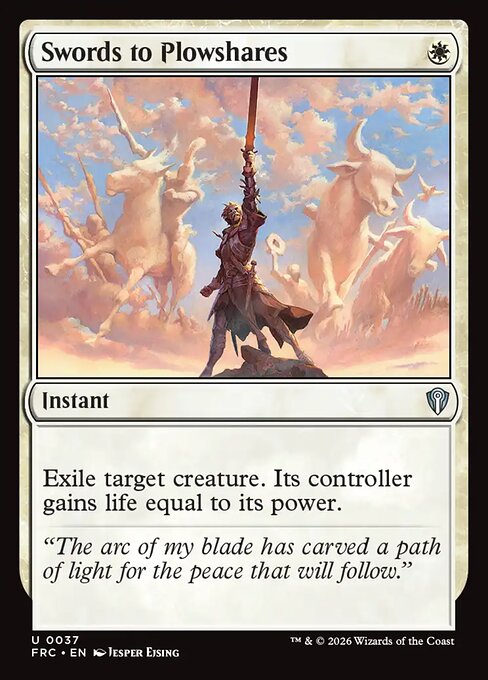
- Remove it before you rely on commander casting. Swords to Plowshares and Path to Exile answer it cleanly for one mana, and Swords only gains its controller 1 life.
- Bounce it with Cyclonic Rift only when you can use the window. They can recast it for two mana, so cast your commander right away.
- Edicts and sweepers also work. Humility strips its ability and leaves a vanilla 1/1, which frees your commander without removing the body.
- Bait with a lesser removal spell first. If your opponent hesitates over your first answer, your second one lands.
- Don't overextend exile or graveyard payoffs into open white mana. If you're tapped out when the Magistrate lands, those cards sit dead until you find an answer.
- Build with castable threats from hand, plus tutors and draw to find them, so the deck keeps functioning while the commander is locked out.
Treat open white mana on turn two as a warning. Don't commit commander mana into it. Swap to a hand-cast threat and keep your removal for the creature that locks you out.
Recent Sets and the Verdict on Magistrate
Recent sets haven't given this niche a clearly relevant replacement. Drannith Magistrate is the best two-mana hatebear for Commander specifically, because it hits the format's central assumption: that you can always cast your commander. It isn't a polite card, so play it only after a Rule 0 conversation.
I'd keep the Knowledge Pool lock for high-bracket tables that have agreed to it. It is fragile and burns table goodwill everywhere else, and Thalia, Guardian of Thraben gets more mileage in most pods. People overreact to the 1/3 body itself, but a creature that dies to Swords is not unfair, only rude. And on turn two against a voltron or commander-reliant table, it can be the entire game.

