
Best Counterspells for Commander: How This Ranking Works
Turn five. Three opponents, and you're sitting on two untapped Islands with a hand full of nothing in particular. The player to your left taps seven mana for a spell that reads like a win condition. Do they play around you? Does anyone? That moment is the whole argument of this article. The best counterspells Commander offers aren't the ones with the biggest power level on paper. They're the ones that fit your pod's bracket and your pod.
The question everybody types into a search bar is whether Counterspell is still worth running in Commander. It is, just not as an auto-include, and the entry at #1 explains why it still tops this list.
The ranking covers hard and near-hard answers to spells in a multiplayer pod. I weighed two things: how well the card fits its bracket, and what it costs you in multiplayer tempo and in money. Bracket 1 and 2 want cheap, low-regret counters. Bracket 3 is where you budget your slots. Bracket 4 and cEDH is where zero-cost counters and Mana Drain dominate. Force of Will, Fierce Guardianship and Deflecting Swat are reported as Game Changers. Check the current official list instead of trusting me, and do the same for anything else, Mana Drain included.
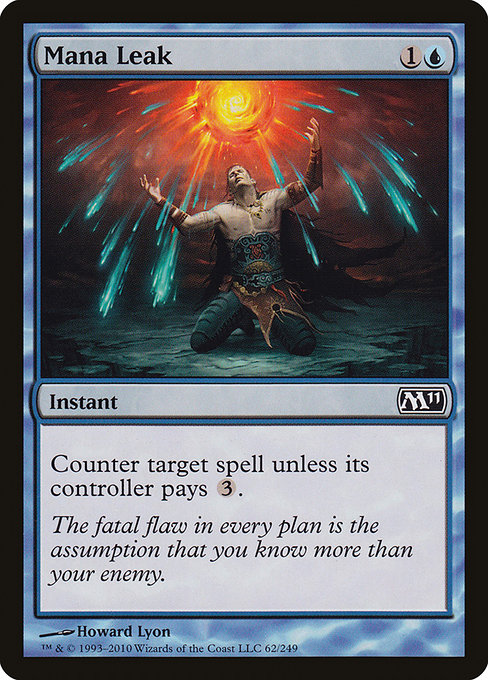
Soft counters get no entry. Mana Leak, Mana Tithe and Condescend ask the caster to pay a tax, and by the time you can afford to hold up mana in Commander, your opponent has lands to spare. Three-mana counter-plus-rider cards like Absorb, Undermine and Ionize cost you a turn of development for a small bonus. The cheap riders that do make the list cost one or two mana, so they don't eat your turn. Access Denied and Spell Swindle cost five mana, committing your whole turn. Every one-for-one also hands the two other opponents a free tempo swing, so cheap and clean wins.
Stifle effects, non-blue answers and fringe cards get their own sections below. And one social note: open blue mana is a signal, and some pods flat out dislike counters. Talk before the game, and pick the right bracket table.
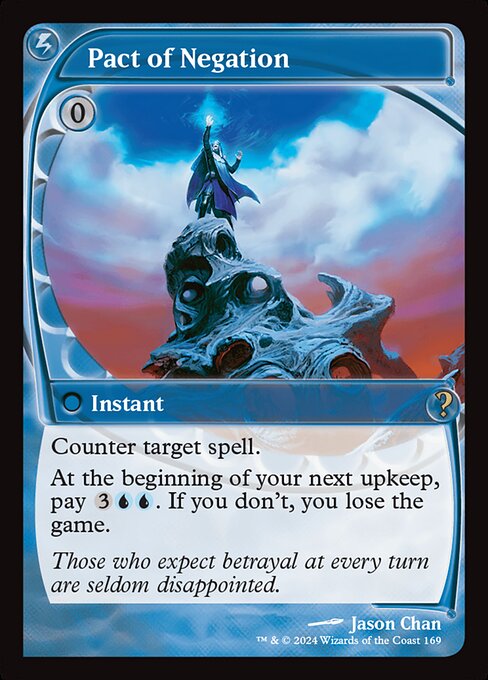
Pact of Negation
Pact of Negation can lose you the game on your next upkeep, and that is exactly why it sits at #12. Cast it without {3}{U}{U} waiting for you and you're done. No card disadvantage story, no "oops," just a scoop. That confines it to Bracket 4 and to a deliberate setup. But when you're tapped out and the table is relaxed because nobody fears an empty board of lands, a counter that costs nothing and hits any spell is filthy. It's best when you know you'll have five mana next turn, or when the spell you'd be countering would end the game anyway. It's also the cheapest of the zero-mana counters at $16.34, which matters far less than whether your deck can count to five. Play it in a combo or stax shell built for that, and everyone else should skip it.
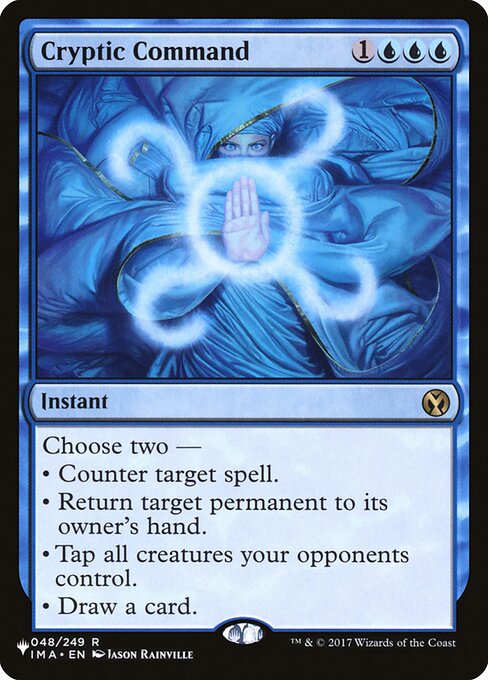
Cryptic Command
Think of Cryptic Command as the flexible top-end, a cousin to Mystic Confluence and Sublime Epiphany. Mystic Confluence costs five and plays softer, Sublime Epiphany costs six and does everything, and Cryptic is the cheapest of the three at {1}{U}{U}{U}, though it demands the heaviest blue. Counter plus bounce, counter plus draw, or tap all your opponents' creatures for a fog-style turn: the modes are great. But UUU makes it a mono-blue or heavy-blue card, and four mana is a lot when three opponents are developing. Run it in blue control at Brackets 1 to 3, where the games are slow enough to afford it.
Force of Negation
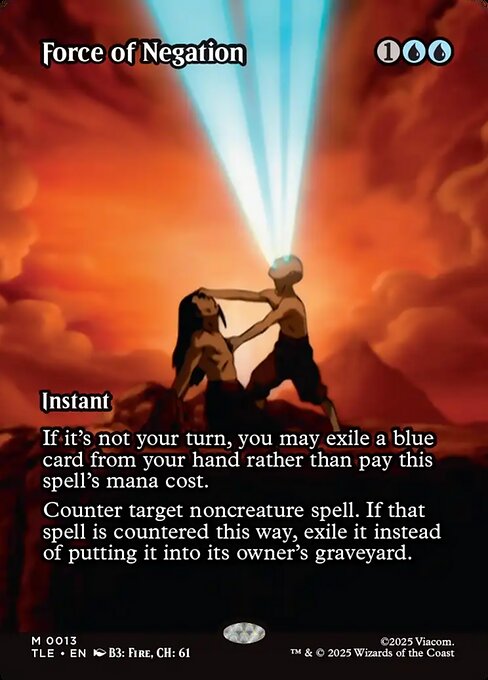
Picture it. It's an opponent's turn, they tutor for the last piece of a combo, and you say "sure" while exiling a blue card and paying no mana. Force of Negation counters a noncreature spell and exiles it, which means recursion plans stay dead. That's a real edge over a plain counter when the target is a combo piece.
It ranks below the best zero-mana options for two reasons. It's only free on an opponent's turn (it costs {1}{U}{U} on yours), and it can't touch creature spells. Force of Will has neither restriction. It's a Bracket 4 card, and the moment it's in the deck, "shields down" turns stop mattering to the table. The card disadvantage is real, though. You're spending two cards for one, so only play it if your list is blue enough to pitch cards without crying. At $46.53, that's a lot of money for a conditional counter.
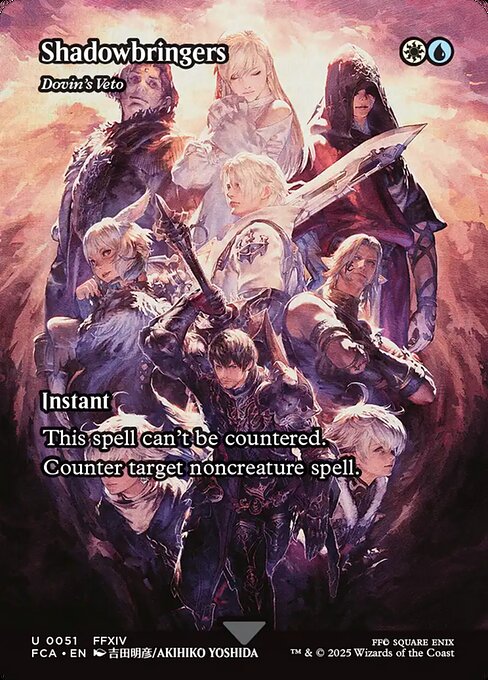
Dovin's Veto
Two mana, can't be countered, hits any noncreature spell, so it wins every counter war it enters. The Azorius-only identity is the price. At $3.76 it's a bargain for Azorius control at Brackets 1 to 3, and it's the cleaner Negate for any deck that can afford the white.
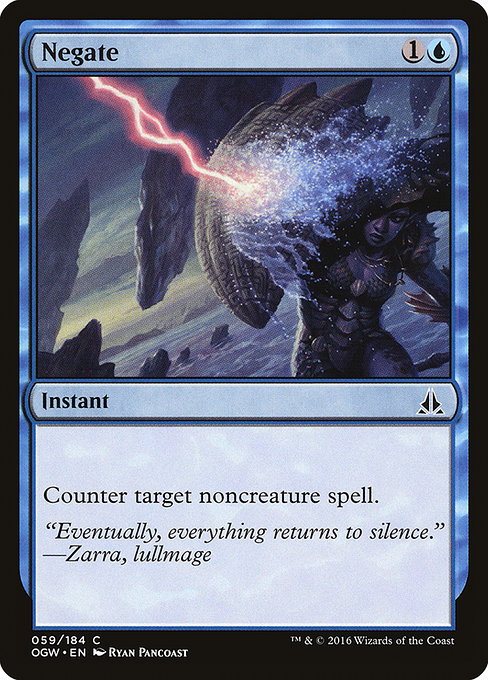
Negate
Negate is the Bracket 1 and 2 answer, and I won't pretend otherwise. It hits the noncreature spells that actually end games, costs about $0.28, and rarely rots in hand. It can't touch creatures, so fill the gap with Essence Scatter or Disdainful Stroke (the latter hits mana value 4 or greater, which covers the big stuff). Spell Pierce is the one-mana version, but it's soft, so skip it in Commander.
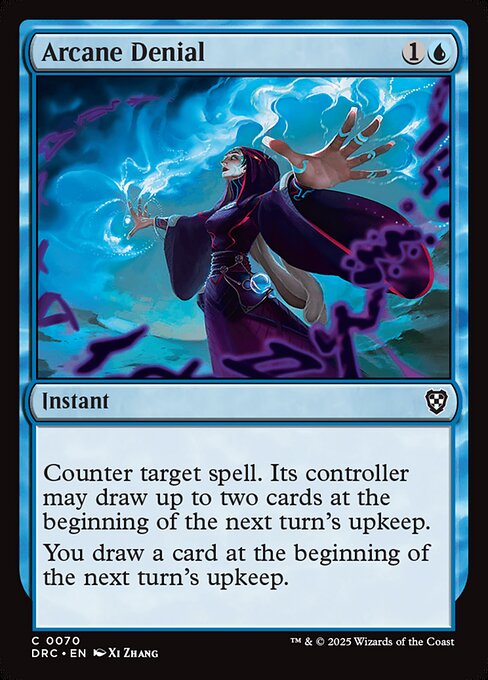
Arcane Denial
Arcane Denial is the budget unconditional counter for lower brackets, and at $2.26 you'd be silly not to try it. You draw a card at the next upkeep, which means mid-turn tempo is unchanged, and your opponent may draw up to two. Across a full pod that's fine. The extra cards sting when the spell you counter is a lone threat, though, so don't fire it at a nothing-burger.
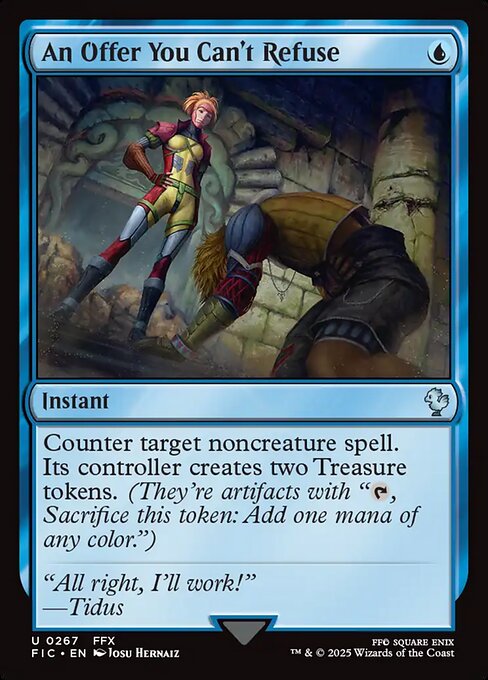
An Offer You Can't Refuse
The Godfather gave us this name, and the offer is generous. You pay one mana, and the other player gets two Treasures. It sounds like you're handing the table a gift, and in a way you are. The trade is great when the spell on the stack would win the game or is a huge sweeper. It's less great when the Treasures fuel the very combo turn you just stopped, so pick your target carefully. Sorcery-speed ramp and extra-turn spells are the best targets. Best at Bracket 3, and it pairs with Swan Song in the one-mana slot. Creature spells walk right past it, so remember that gap.
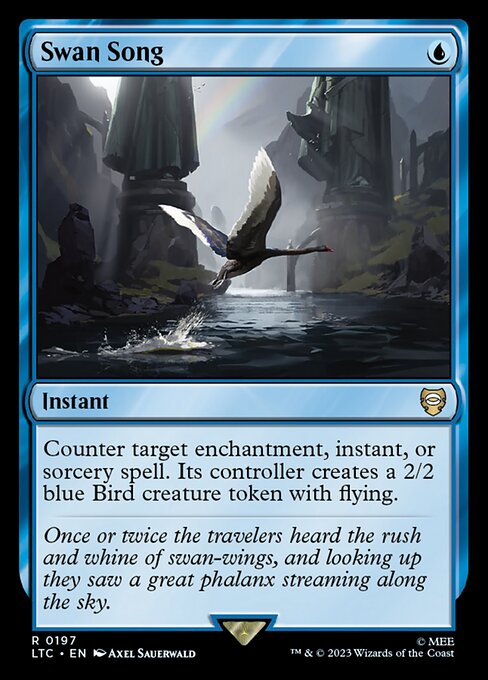
Swan Song
You counter the tutor. You slide over a 2/2 flier. You smile. The table groans, but nobody is actually mad, because they know they got a Bird. Swan Song hits enchantments, instants and sorceries for one mana, which means it wins counter wars: it can answer another counterspell or a protection spell, which many one-mana counters cannot. It costs you in creature-light games where the Bird becomes a real clock against you. Compare the narrow cheap counters: Strix Serenade is limited to artifacts, creatures and planeswalkers, and Mental Misstep answers nothing above mana value 1. They can't protect themselves on the stack and can't stop the cards that actually threaten you. Swan Song can. At $10.73 it's a good deal for what it does.
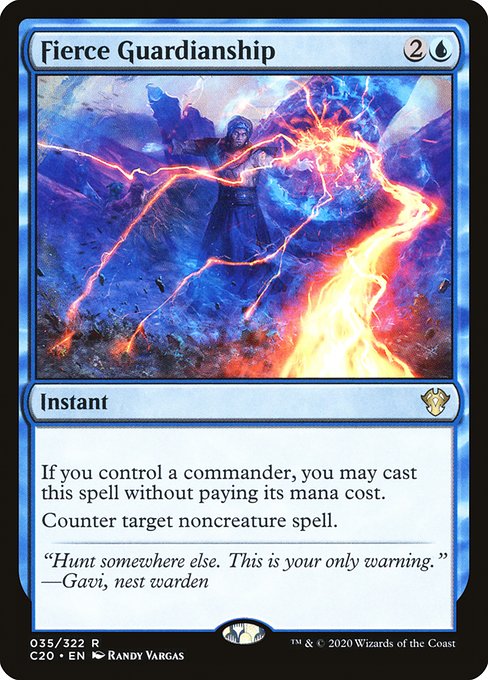
Fierce Guardianship
Let's start with the limits. It's free only if you control a commander, otherwise it's {2}{U}. It counters noncreature spells only. And it's expensive. Those limits barely matter when your commander is a combo piece or a protection target, and in Commander the commander is on the battlefield most of the game, so it's usually free. It ranks here because Bracket 4 is where it earns the slot, and it fits fewer pods below that. Free is free. Your opponent taps out for the thing that wins, and you say no without spending a mana.
It's a Bracket 4 card. Check whether it's a Game Changer on the current list before you put it in a Bracket 3 deck, because it may use up one of your Game Changer slots. Deflecting Swat is the red cousin, with the same free-cast clause but a redirect effect that matters mostly in free-counter discussion. For Brackets 3 and below, cheaper stand-ins do almost as much: Dovin's Veto in Azorius, Negate in any other blue deck. You lose the zero-mana part, but you keep the stopping part for pennies.
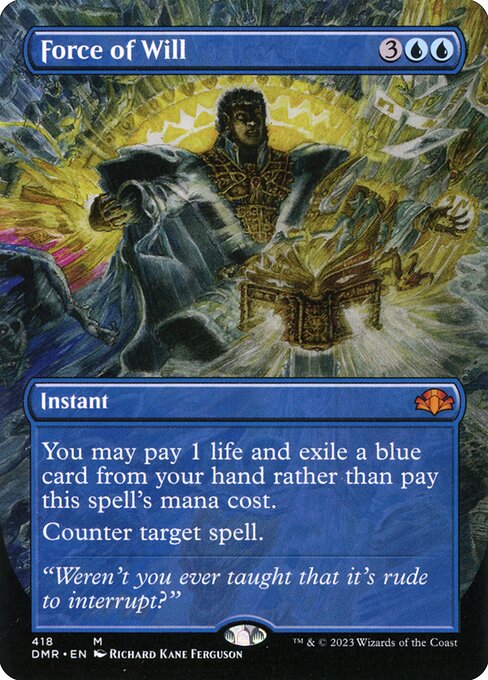
Force of Will
Compare it to Mana Drain and Counterspell. Both of those cost {U}{U}. Force of Will costs one life and a blue card, or {3}{U}{U} the slow way. It hits any spell, creature or not, and it asks for no commander or turn condition and no delayed payment, which Pact of Negation cannot say. Force of Negation is turn-restricted and noncreature only.
Here's the turn. Your opponent has the combo and a pile of untapped lands. They go for it on their own turn. You exile a blue card, pay 1 life, and the spell is gone. No mana spent, no tempo lost on your own turn. It's the cleanest answer to "I'm tapped out and the table knows it."
Two cards for one is a real cost in multiplayer, because the other two opponents are now ahead of you in resources. It's reported as a Game Changer, so confirm the official list. That's why slower brackets should look elsewhere. At $59.19, it's a lot of money for a card that only really shines at Bracket 4.
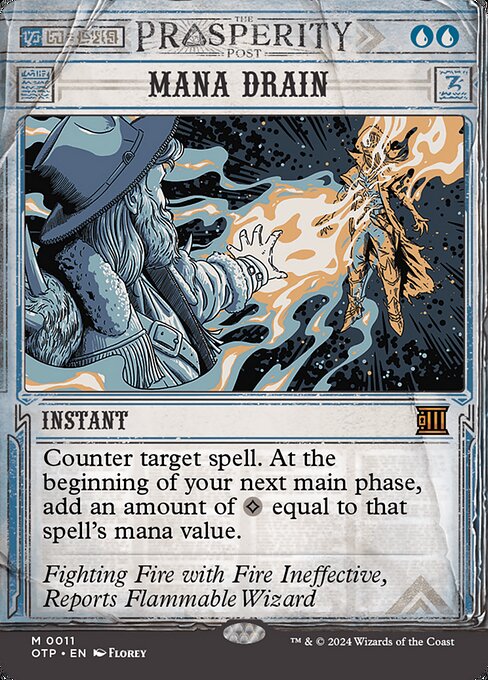
Mana Drain
Turn four. An opponent ramps into a six-drop and taps out. You say "no" with two Islands. Next main phase you untap with six extra mana, plus a hand full of things to do with it. That's the best-case Mana Drain, and it's busted. It is a strict upgrade to Counterspell in raw power when you can cash in the ramp.
The salt comes with it. Mana Drain feels meaner than it should because the table watches you ramp off their best spell. The $56.12 price is real too. What you get vanishes if you don't spend it, so plan the follow-up, with a big threat as the obvious play. Without that plan, you paid a premium for a Counterspell. Works at Brackets 3 and 4, but check the current list before you assume anything.
A budget option for Wizard decks is Mana Sculpt: {1}{U}{U}, and if you control a Wizard you get mana back. It's cheaper at $1.01 but needs the Wizard, so it's a role-player. For everyone else, Counterspell is still the pick, and the price gap is the reason it keeps the crown.
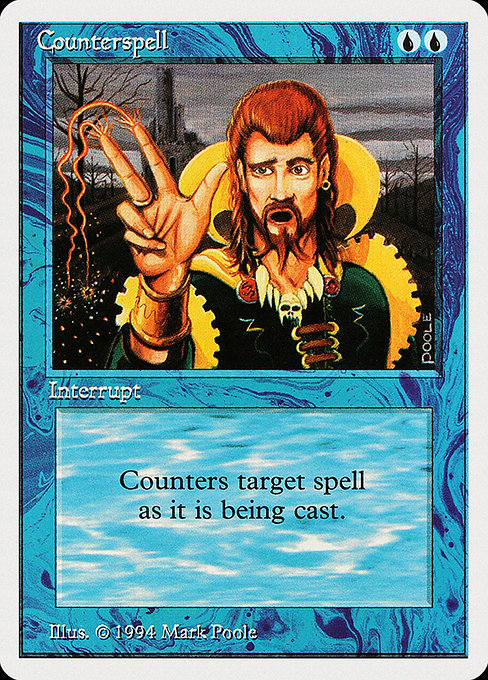
Counterspell
Yes, Counterspell is still worth running in Commander. It's just no longer an auto-include. Some players cut it first because a plain one-for-one helps the other opponents. Others add it first because it's the cleanest two-mana unconditional answer you can buy. Both camps have a point, and I land on the second.
The card hits anything for {U}{U}, and that's the number you need to remember. UU means you're a blue deck first, and the tempo cost is real at a full table, since you're holding mana while the other two opponents do their thing. At $4.38 on current listings it's cheap enough to try, and it's been reprinted widely, so cheaper copies float around.
Bracket 3 is where it shines. One counter there can stop a combo or a wincon, and the table isn't packing free spells to make your plan awkward. At Bracket 4 it's weaker: opponents run free interaction, and you must be proactive instead of waiting. Then there's the modal and value debate. Swan Song answers a threat for one mana. Arcane Denial replaces itself and stays at $2.26. Mana Drain hands mana back to you. In some pods those do more per card. But for the best all-round pick, with no conditions and no weirdness, Counterspell is it.
It's cheap and clean, and it never asks you to build around it, which is why it sits above Mana Drain here.
Black and Green Counterspells in MTG: What Actually Exists
Let's be upfront. Black counterspell MTG searches turn up almost nothing real, and a green counterspell MTG search turns up very little. These colors don't have true counterspells.
Black has two. Withering Boon counters a creature spell for {1}{B} and 3 life, and Dash Hopes lets any player pay 5 life to counter it. Both are fine in theory and bad in practice at a four-player table, where someone always has life to burn.
Green has more oddities. Green Slime is a flash 2/2 that counters an artifact or enchantment ability and destroys the permanent. Bind counters an activated ability and draws a card. Verdant Command counters a planeswalker loyalty ability. Emerald Dragon // Dissonant Wave counters an activated ability or a trigger from a noncreature source, then lets you cast the 4/4 flying trampler later from exile. As a dragon person, I want to love it. It's a role-player.
Colorless is an option. Null Elemental Blast answers multicolored spells, Warping Wail counters a sorcery (and demands a colorless source), and Kozilek, the Great Distortion is a ten-mana commit.
The gold options are better, as long as you're in the right colors. Decisive Denial, Quandrix Charm, Quandrix Command and Repudiate // Replicate want green and blue, so they live in Simic, Sultai and friends. Theorix Charm needs both blue and black. Brokers Confluence is the most color-hungry of the bunch.
Usually the best non-blue answer is protection or removal.
Stifle Effects: The Underplayed Counters Modern Commander Needs
Your opponent swings with a creature that has an annihilator trigger. Or they crack a fetch land to set up a big turn. Or their commander's attack trigger is about to snowball the board. A counter that answers only spells misses all of it. Modern Commander is full of enter-the-battlefield and trigger engines, which means Stifle is the only answer in plenty of board states. It's $15.74 and one mana.
The rules notes: mana abilities can't be targeted, replacement effects can't be countered, and only cards that say "ability" can counter triggers.
The options, by what they do best:
- Tale's End answers most legendary commanders as they're cast, or an ability, for two mana. It doesn't help once the commander is already out unless the target is an ability.
- Defabricate is modal: counter and exile an artifact or enchantment spell, or counter an ability. At $0.22 it's underused.
- Disallow hits anything for {1}{U}{U}, including a spell, an activated ability or a trigger.
- Trickbind has split second and stops that permanent's activated abilities for the rest of the turn. It's $17.19.
- Louisoix's Sacrifice is {U} plus either a legendary creature sacrifice or {2}, so in practice it's a three-mana counter that hits abilities and noncreature spells.
- Consign to Memory is a one-mana option that hits triggered abilities or colorless spells.
- Sublime Epiphany is the six-mana everything button, and Nimble Obstructionist is a flash flier that counters an ability when cycled.
- Spider-Sense counters an instant, sorcery or trigger, and costs only {U} if you return a tapped creature you control to hand, which suits ninjutsu and other tap-and-bounce shells.
For Bracket 3 pods, I'd put one stifle effect in the deck. It catches people who only play around traditional counterspells.
Counterspells on the Fringe: Cards Worth Watching
Most of these are conditional or incremental. Mana Sculpt is a budget Mana Drain that needs a Wizard to return its mana. Countersculpt costs {U}{U} plus an extra {1} unless you behold a Jace, so in most decks it's a three-mana counter with a Jace token rider. Dismissive Denial is {2}{U}{U} but doubles as basic landcycling for {2}, which makes it a hard counter that never rots in hand. That's the one I'd actually try.
Decisive Denial, Launch Mishap and Stern Scolding are situational: they hit only certain spells, or ask for a second color. Brush Off is the flexible one of the group, since it counters any spell and gets cheaper when it targets an instant or sorcery. Play the situational ones in a deck that wants that exact job.
Refute is an upcoming card: Counter target spell, then loot, for {1}{U}{U}. It's part of Star Trek Commander, which has a release date of 2026-11-13.
Playing Counterspells Without Ruining the Table
Open blue mana is a signal. Sometimes it's a bluff, and a bluff can be as good as the card. But get caught bluffing and the table punishes you. Waiting through priority is almost always correct: let other people spend removal first, then answer the spell that actually matters. And don't lobby others to use their own interaction.
The social cost is real. I've watched a four-player pod slow to a crawl on a Rhystic Study draw, with every spell turning into "do you pay the one?" Some players cut it for Fact or Fiction and the games speed up. Some pods dislike counters, so set expectations before you shuffle up.
Counterspell shells work best with payoffs. Baral, Chief of Compliance cuts the cost of your instants and sorceries and loots when you counter. Talrand, Sky Summoner turns every counter into a 2/2 flier. Archmage Emeritus draws a card off each one. If you don't want to be the counter person, Propaganda and Ghostly Prison are soft interaction alternatives that slow the table without a stack war.
The Rest of the Field
- Stifle is a pure ability counter and a useful niche tool, but too narrow for a ranked entry.
- Tale's End answers legendary spells and abilities, which is too narrow for a ranked entry.
- Defabricate is underused: a flexible artifact and enchantment counter that also has a stifle mode.
- Rewind is a solid counter-and-replay card, but counter-focused decks have better options.
- Disallow also hits abilities, which makes it a reasonable role-player, though narrower than the unconditional counters above.
- Free-cast redirect Deflecting Swat matters mostly in free-counter discussion.
- Spider-Sense is a situational instant and sorcery counter that only ninjutsu and other bounce-your-own-creatures shells will care about.
- Green Slime is interesting but limited, a green flash ability counter.
- Mana Sculpt is a conditional Mana Drain that requires a Wizard.
Counterspell is the best pick: cheap, unconditional, and strongest in the bracket where most Commander gets played. The card I'd cut from most decks is the free-counter package. Force of Will and the rest sit high on this list because Bracket 4 is where they earn their slots, and they're overrated outside it, because two-for-one costs and slot pressure punish you in Bracket 3 pods. Mana Drain is busted when you can spend the mana, but its price premium is only justified by decks that can actually use the ramp.
The real trap is the soft counters and the three-mana riders, Mana Leak, Absorb and Undermine. They look like value and lose tempo in multiplayer. A Bracket 3 deck should run Counterspell, Swan Song and at least one stifle effect before it spends a dime on Force of Will.


