
Turn five. Ashling is on the board, you have five lands and a Smokebraider, and Mulldrifter is in your hand. You evoke it for {2}{U}. The printed evoke beats Ashling's {4}, and that detail matters later. You draw two off the enter trigger, the sacrifice goes through, and Ashling hands you a hasty token that draws two more while a 2/2 flier swings into an empty sky. Four cards for three mana, plus a body that was never supposed to exist.
It plays like Panharmonicon and Sneak Attack got stapled onto one three-drop. The people who build it as a pile of Elementals find out the hard way that the first Swords to Plowshares on Ashling ends the party. Ashling is a value engine that feels broken on turn five and fragile on turn six, and the build you choose decides which one you get.

Who Is Ashling, the Limitless?
Ashling, the Limitless is a 2/3 for {2}{R} that gives every Elemental permanent spell you cast from your hand an extra evoke {4}. Whenever you sacrifice a nontoken Elemental, she makes a token copy with haste. That token dies at your next end step unless you pay {W}{U}{B}{R}{G}.
Read that last part twice. Keeping a token costs your whole turn: four for the evoke, five more to stay. Most turns you won't pay it. You'll treat the token as a free second ETB and a hasty attacker.
What she doesn't do matters just as much. She has no ramp, no protection, no evasion, and she can't be evoked herself, because she's cast from the command zone and not your hand. The token copies don't loop, since tokens aren't nontoken. She also eats removal, because she's the only engine piece you can't replace.
Two rules wrinkles help you. The evoke sacrifice is a trigger, so you can respond with a sacrifice outlet. Ashling is an Elemental too, and sacrifice triggers look back in time, so she sees her own sacrifice. Cast her at a table that plays removal and you'll want both tricks.

The Plan: Evoke, Sacrifice, Copy, Repeat
Early: Land, dork, Risen Reef. The Reef ramps and draws off every Elemental you play for the rest of the game, so it's the best turn-three play that isn't Ashling.
Mid, turns four to six: Ashling lands, then you evoke something fat. Shriekmaw kills twice. Mulldrifter draws four. Avenger of Zendikar, which normally costs seven, evoked for four, makes two full batches of Plants. Cost reducers pull this up a turn or two. Turn six to eight is the normal point where the table realizes you've been drawing three cards a turn.
Late: Cards that leave a body behind, like Titan of Industry and Omnath, Locus of Rage, close the game. Titan evoked leaves two Rhino tokens that stay forever.
The honest cost is that evoke gives you the ETB twice and leaves nothing on the board. Tap out for an evoke chain with no permanent threats and you swing back into an empty table, and opponents will punish you for it. Mix in bodies that stay, and decide each turn whether paying nine total mana to keep a token beats casting something else.

The Ramp Package: Elemental Mana and Fixing
Ten slots. Eight are locked in, and two are flexible rocks or land-fetchers.
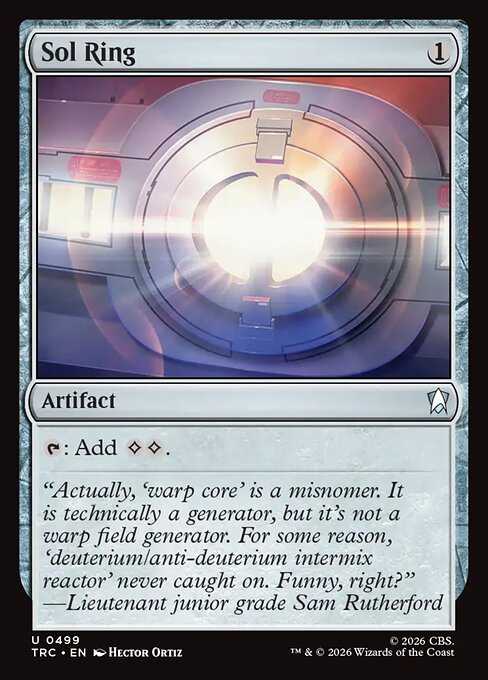
- Sol Ring and Arcane Signet are the baseline. No notes.
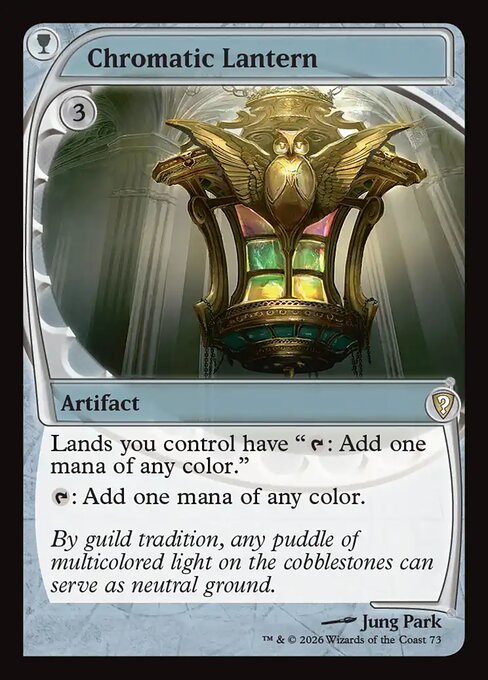
- Chromatic Lantern fixes your lands and itself, and five colors need that.
- Smokebraider and Flamebraider tap for two mana that can be spent on Elemental spells. That pays evoke costs, since an evoked Elemental is still an Elemental spell. They make a turn-three Ashling with an evoke on turn four realistic.
- Brighthearth Banneret and Herald's Horn (choosing Elemental) shave the total cost, evoke included. A Banneret turns {4} into {3}.
- Jegantha, the Wellspring taps for WUBRG, but that mana can't pay generic costs. It's the cleanest way to cover the token upkeep, and it does nothing for the evoke itself.
The dorks die to every sweeper, so don't plan your whole turn five around them. Herald's Horn is an artifact, so it dodges creature sweepers in a way Smokebraider and Banneret can't. Lean on the Horn and the rocks to keep you functional after a wipe.
Draw Engines: Double-Trigger Card Advantage
Here's the scenario. You have Ashling, Risen Reef, and Mulldrifter in hand. Evoke it: Reef triggers on entry, you draw two off the original, and Reef triggers again when the token lands and the token draws you two more. That's four cards from Mulldrifter, plus up to two lands or extra cards off the Reef. The engines don't get weaker as you chain more Elementals; they get faster.
Nine draw slots, with eight named:
- Mulldrifter is the poster child.
- Nulldrifter draws on cast, so the draw happens even when you evoke it. The token doesn't draw again, but it attacks as a 4/4 flying annihilator with haste. Honestly, Ashling's evoke {4} is worse than its printed {2}{U}, so she mostly helps the cards that lack evoke.
- Elemental Bond and Garruk's Uprising reward power 3 or 4 and up. Both see the hasty token enter too.
- Kindred Discovery with Elemental as the chosen type draws on entry and on attack. The token's attack counts.
- Temur Ascendancy draws on power 4 or more and hands haste to your whole team.
- Regal Force counts green creatures, and your Plant and Rhino tokens count.
The ninth slot is flex, so fill it with whatever your pod's removal and pace demand.
Risen Reef is the engine to land before you start evoking anything, because every Elemental that follows pays it off.
Interaction: Free Elementals and Channel Lands
The Elemental Incarnations are the best surprise here. Solitude, Fury, and Subtlety have printed evokes that exile a card of their color from your hand. That's free, but it costs you a card. Ashling's {4} is the fallback when you'd rather keep your hand, and it only beats the free exile when the card is worth more than the mana. A free alternate cost and Ashling's evoke can't stack, so pick whichever fits the moment: free when you're protecting yourself, {4} when you're not discarding.
Evoked Solitude exiles two creatures. Evoked Fury deals 4 damage, then 4 more when the token arrives. Shriekmaw kills twice for {1}{B}, and Lamentation destroys two opposing creatures and gains six, then lands in the graveyard with encore waiting. Subtlety is narrow, and Endurance is more a flash blocker and graveyard hate than removal, but both count toward the eight spot-removal slots alongside Swords to Plowshares.
Blasphemous Act is your single sweeper, held for the turn that ends the game. One wipe kept in reserve beats four cast early, especially with an Omnath around to ping on every death. Boseiju, Who Endures and Otawara, Soaring City are in your 37 lands, so they cost no spell slot.

Protection: Sacrifice Outlets and Backup Plans
It's turn six. They Swords your Ashling in response to your evoke. The engine is gone, and you're sacrificing nothing.
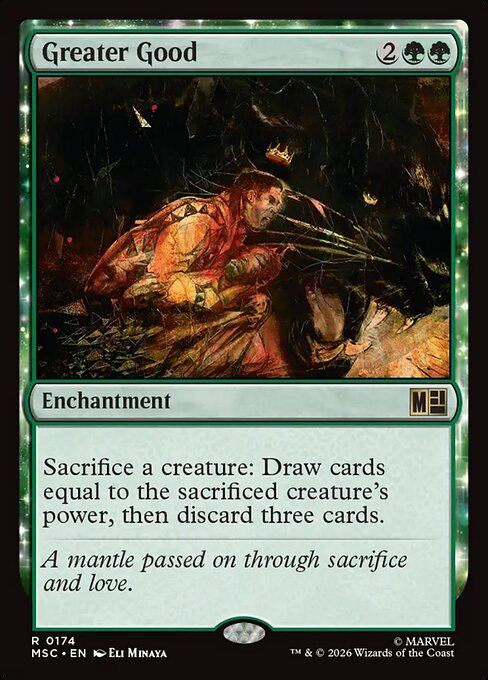
The deck is built around that failure. Four slots handle it: Greater Good, Grave Pact, Snakeskin Veil, and Steely Resolve.
Greater Good is the all-star. It eats the Elemental in response to removal, which means Ashling sacrificed in response to Swords still makes a token Ashling. It also makes an evoked fatty into a draw engine, since you can sacrifice it in response to the evoke trigger and draw cards equal to its power, then discard three. The discard scares people, but a hand full of evoke fodder shrugs it off. Grave Pact turns each evoke into two sacrifices on opposing boards. In four-player, that's a lot of dead creatures per cast.
Snakeskin Veil is the cheap fix. Steely Resolve set to Elemental gives every Elemental shroud, opposing ones included. Your Plant and Rhino tokens get nothing. It also turns off your own targeting, so Mass of Mysteries and Omnath, Locus of the Roil can't target your Elementals while it's in play.
Sneak Attack and Incandescent Soulstoke aren't protection, but they're the backup plan. Both sacrifice the creature at the beginning of the next end step. Ashling's copy is created during that step, so its own deadline is your next end step, a full turn cycle away.
Your Win Conditions: Three Ways to End the Game
Three dedicated closers, with a synergy-core cast behind them.
Avenger of Zendikar evoked for four makes two batches of Plants, but land drops only pump them while the Avenger token is still around. Pay the WUBRG to keep it, or hard-cast the real one, and the Plants keep growing every turn after. Either way it needs a fast table or a wipe-free one. Omnath, Locus of Rage makes a 5/5 per land and pings for 3 whenever an Elemental dies, so every evoke becomes two burn spells and every opposing blocker has a bad day. Keep a non-evoke body on the board or the pings never reach.
Mass of Mysteries is the sleeper, because the myriad trigger turns an Elemental attacker into extra copies. Give it to an evoked Mulldrifter's hasty token and you're drawing off every myriad token. It costs exactly WUBRG, so it works as a hard-cast too.
The synergy-core bodies are Titan of Industry, Cavalier of Thorns, and Maelstrom Wanderer. Evoke Wanderer for {4} and you get two cascades, a hasty token, and haste for everything. Cavalier evoked hits two lands, and with Omnath that's two 5/5s.

Double Triggers and Token Doublers
Everything here sits in the 27-card synergy core, except that Anointed Procession and Parallel Lives are optional alongside Doubling Season.

- Twinflame Travelers is the best doubler because it doubles Ashling herself. Two copies per sacrifice, and every Elemental ETB fires twice.
- Yarok, the Desecrated and Panharmonicon each add one extra trigger, not a multiplier.
- Molten Echoes set to Elemental is a second Ashling in enchantment form. Evoke Mulldrifter and you get three ETBs: the original, the Echoes token, and the Ashling token.
- Roaming Throne adds another trigger, but at $49.87 you should pass unless you're already rich.
- Doubling Season doubles the copies and the Plants. Anointed Procession is $59.36 for a worse version of the same effect, so skip it and spend the money on something that actually changes your turns.
Token doublers only matter when Ashling's copy is created, not just for Plants. The enchantment-heavy builds are fragile too, since a wipe on your creatures leaves a table full of nothing.
Cost Reducers, Free Casts, and Loop Warnings
This is the synergy-core cluster that makes the deck go off.
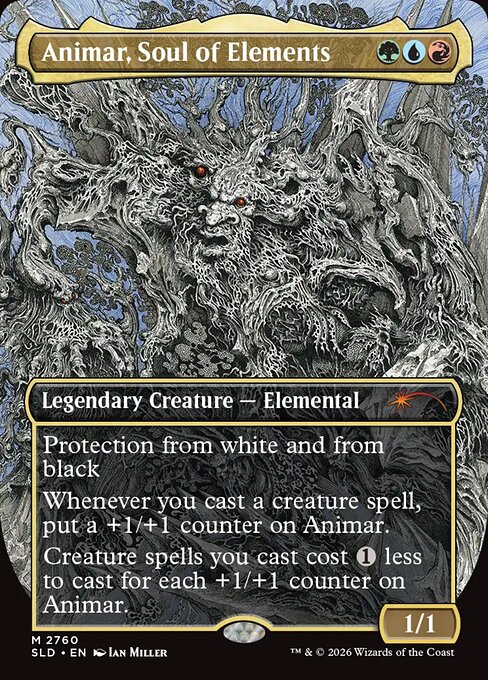
Animar, Soul of Elements is the lynchpin. Each creature spell adds a counter, and each counter cuts creature costs by one. After four casts, evoke is free. That's turn four or five with a good opening. Sneak Attack and Incandescent Soulstoke cheat Elementals in without a cast. Greenwarden of Murasa and Horde of Notions bring evoked fatties back. Flamekin Harbinger and Worldly Tutor find the piece.
Be clear with yourself and the table that loops exist: a loaded Animar, a free evoke, a draw Elemental, and recursion can run away. They're optional upside, not the plan. Ashling's own tokens won't loop, since tokens aren't nontoken. Talk to the table about bracket before you slam a loop, not after.
Fringe Elementals and the Honest Verdict on Them
None of these are essential.
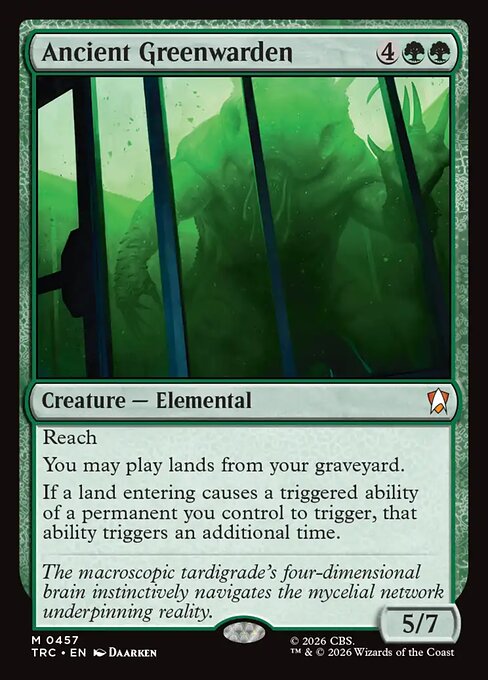
Ancient Greenwarden is the one to watch. It doubles landfall, so it pairs with Omnath and Avenger. I'd call it a flex consideration, not an auto-include, at six mana. Frostbite Pyromental is cute: it sacrifices itself at the beginning of the end step and Ashling copies it, but the token shows up too late to attack, and its own sacrifice clause takes it out at your opponent's end step, long before Ashling's deadline. Feed it to Greater Good before combat and the token gets its own swing. It's fun, not necessary.
Willow-Wind and Pyre Rhymer // Molten Tide are low impact. Skip them. Omnath, Locus of the Roil is stronger, but note it can't target your own Elementals under Steely Resolve.
How to Build It: Midrange Value vs. Optimized Combo
The default is midrange value: 37 lands, 10 ramp, 9 draw, 8 spot removal, 1 board wipe, 4 protection, 3 win conditions, and 27 synergy core, which makes 99. Average mana value lands around 3.2 with evoke counted at four.
The mana base wants untapped duals, shocks, fetches, and tri-lands, with Boseiju and Otawara inside the 37. Skip clunky tap lands that slow your WUBRG turns.
On a budget, cut Chromatic Lantern and the expensive lands first. Keep Sol Ring and Arcane Signet.
The optimized variant, separate from the above, trims lands to about 35 and adds Eladamri's Call and one more tutor next to Worldly Tutor. That's where Animar, Soul of Elements chains become reliable. It's a power jump, so tell your table.
The Verdict: Is Ashling, the Limitless Worth Building?
Build her if you love ETB value and five-color puzzles. Skip her if you want a resilient commander or a single-card combo.
The floor is a pile of Elementals that stumbles on mana. The ceiling is a double-trigger value machine that wins out of nowhere, usually when Risen Reef, Mulldrifter, and a doubler line up. She rewards players who build for the turn after the removal spell, not just the turn she goes off.
I'd cut Anointed Procession from every list, because Doubling Season does the same job for less. And Greater Good is the all-star of the protection package, even though the discard-three clause scares people. It's your insurance policy.
Three-Word Verdict: Plan for removal.


