The Card Count That Tells You Almost Nothing
The MTG Game Changers list, the flag roster Wizards publishes for Commander brackets, is a document it keeps editing, and most players treat it like a frozen checklist. They tally flags, land on a number under four, and stop thinking. That tally is the least informative step in checking a bracket.
Picture a preconstructed deck with Seedborn Muse in it. That single flag makes it technically Bracket 3, yet a deck like that tends to get shuffled up and played as Bracket 2, because nobody at the table is going to ask the person holding a stock precon to bring something else. Now flip it. A deck with zero flags, built around a fast and consistent engine, can run a table over before anyone finds a sweeper.
Both situations pass the count. The count only tells you how many flags the deck carries. It doesn't tell you how fast the deck wins or how well it assembles itself, and those two things set the experience everyone else gets. The rest of this piece covers what the roster is, how it has changed, and where counting stops being useful.

What Is the MTG Game Changers List? The Quick Answer
Wizards maintains a set of Commander cards flagged for dramatically warping games, and it calls them Game Changers. They do it by letting one player run away with resources, by creating play patterns many tables dislike, or by tutoring efficiently for a deck's best card. Those flags set minimum brackets. Brackets 1 and 2 allow zero Game Changers, Bracket 3 allows up to three, and Brackets 4 and 5 have no cap. The flagged cards also work as a ban watchlist, since the cards most likely to be banned later are the ones already marked.
The Bracket Flag Roster Is a Changelog, Not a Snapshot
Flags launched in February 2025. Wizards has edited them since, and every edit changed what "three flags" means.

- The expansion. Cards that come off the ban list land on the roster automatically, because anything unbanned goes straight onto it.
- The October 2025 trims. No bans or unbans, just walk-backs. Expropriate, Jin-Gitaxias, Core Augur, Vorinclex, Voice of Hunger, Food Chain, and Deflecting Swat came off. So did the commanders Urza, Lord High Artificer, Yuriko, the Tiger's Shadow, Kinnan, Bonder Prodigy, and Winota, Joiner of Forces. The logic: expensive spells carry their own cost, and combos are already policed by bracket text.
Sources I read disagree on exact dates and totals, so I'm not printing a card count. A number I gave you would be stale or wrong. Open Wizards' live version before you build, because anything on a blog, this one included, is a snapshot.
The List by Function: Seven Jobs a Flagged Card Does
Alphabetical lists hide the logic. Sorted by job, the pattern is easy to see.

- Fast mana: Ancient Tomb, Mishra's Workshop, Chrome Mox, Mox Diamond, Mana Vault, Lion's Eye Diamond, Jeska's Will.
- Free interaction: Force of Will, Fierce Guardianship.
- Tutors: Demonic Tutor, Vampiric Tutor, Mystical Tutor, Enlightened Tutor, Imperial Seal, Gamble, Worldly Tutor, Crop Rotation, Natural Order, Survival of the Fittest.
- Card advantage and mana engines: Rhystic Study, Necropotence, The One Ring, Bolas's Citadel, Consecrated Sphinx, and Smothering Tithe, which makes a Treasure whenever an opponent draws a card unless that player pays {2}.
- Stax and hate: Humility, Aura Shards, Opposition Agent, Notion Thief, Orcish Bowmasters.
- Combo enablers: Thassa's Oracle, Underworld Breach, Ad Nauseam, Coalition Victory, Biorhythm, Panoptic Mirror, Field of the Dead.
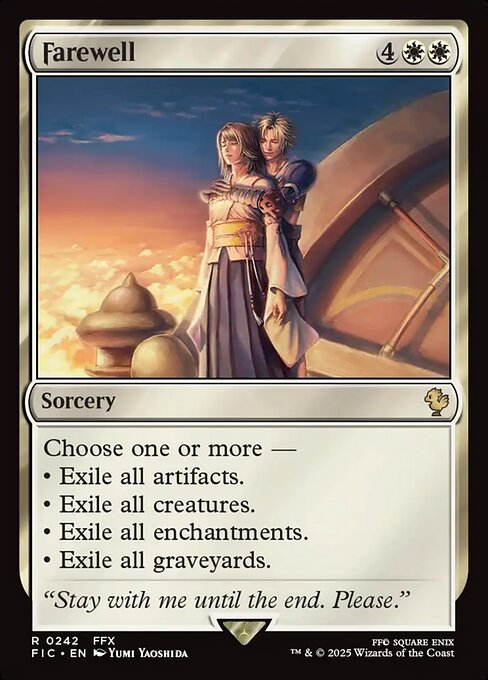
- Board resets: Cyclonic Rift and Farewell, which can exile artifacts, creatures, enchantments, and/or graveyards, depending on the modes chosen.
Commanders were mostly pruned. Tergrid, God of Fright is the notable one still flagged, because she is miserable to face from the command zone or the 99.
Why These Cards: The Inclusion Philosophy and Its Critics
The stated logic is that a flagged card should be a big warping effect that stands out without any synergy. The One Ring improves nearly every deck it enters. Spells at nine or ten mana were walked back because the mana is the cost, and extra turns and mass land denial are handled in the bracket definitions instead. Combos mostly go to the bracket text too, though a handful of combo pieces stay flagged anyway. Commanders came off because you can opt out of a commander at the table far more easily than you can opt out of a card in someone's library.
The dissent is real, and I don't think any of it is settled.
Critics say mana value is a poor proxy. Expropriate costs nine on paper, but cheat-it-out decks cast it for far less. Others say pruning commanders created an undocumented "banned as commander" list. Yuriko, the Tiger's Shadow has Commander ninjutsu, which is why she is more oppressive in the command zone than in the 99, and the same restriction now exists with no documentation. A third camp says tutors don't belong on a list at all. A tutor in a deck with no busted target finds nothing busted. Intent matters more than the card.

The Sol Ring Problem: Not on the List, Still in the Conversation
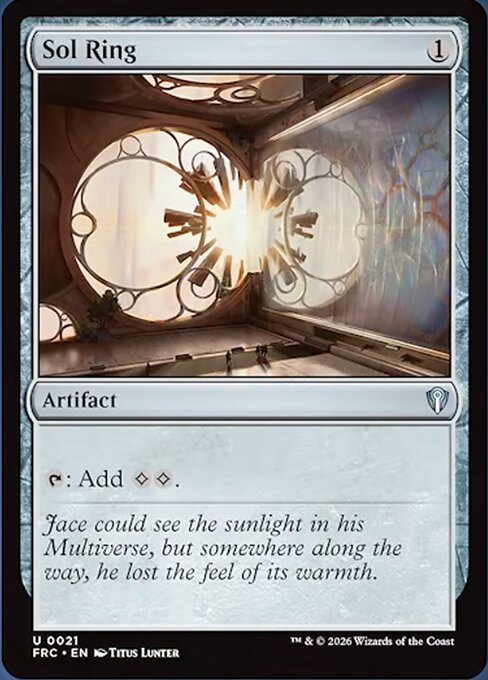
Sol Ring is not flagged by Wizards. Anyone saying otherwise is conflating "powerful" with "flagged." Whether it should be flagged is a community argument, not a Wizards decision, so check the current published version.
The argument rests on tracked-game data showing that a turn-one Sol Ring correlates with higher win rates and faster wins. That is correlation, not causation, since decks that curve out are also the decks most likely to keep a hand with a one-drop rock.
The community splits three ways. Some argue labeling changes nothing, so ban it or leave it, and since it ships in every precon, leaving it is the practical result. Others want it in the Bracket 4 fast-mana tier next to Mox Diamond, while a third group treats it as a variance engine that fades as the game goes long, unlike Rhystic Study, which scales with the table.
Compare it to Seedborn Muse. It's a five-drop that, in a four-player pod, untaps your permanents on all three opposing turns. Seedborn Muse carries the flag and looks harmless, while Sol Ring carries none and isn't. My advice: disclose Sol Ring-style cards in Rule 0 even though they don't count toward the cap.
Three Flags Does Not Mean Bracket 3 and Fine
Picture a Bracket 3 table. One deck has two flags and goes off on turn six. Nobody is holding interaction, and someone says "can anyone stop this?" to four tapped-out players. The deck was legal. The experience still failed.
Consistency sets power, not count. Tutor density and goldfish speed matter, but the real test is what a normal player would need to beat the deck. If the answer is a specific, unusual card rather than a generic sweeper or graveyard hate, the deck skews higher than its count. A zero-flag mutate engine or artifact-storm shell can outrun a pile of flagged staples and never trip the cap.
The Reddit disagreement is worth keeping. Bracket 3 is wide, and players keep declaring ordinary loops and synergy engines as forcing a minimum bracket, which builds a soft ban list. The sharper complaint is on the other end: a Bracket 2 deck that runs a few flagged cards has no real home under the current system, and that is the problem I'd fix first. Neither problem shows up in the count.
The 30-Second Bracket Check and Swap Table
Count the flags, then ask how fast the deck wins and what interaction it demands from the table. The cap is three, but the count is only the first filter.
To drop a flagged deck to Bracket 2, these swaps are the cleanest:
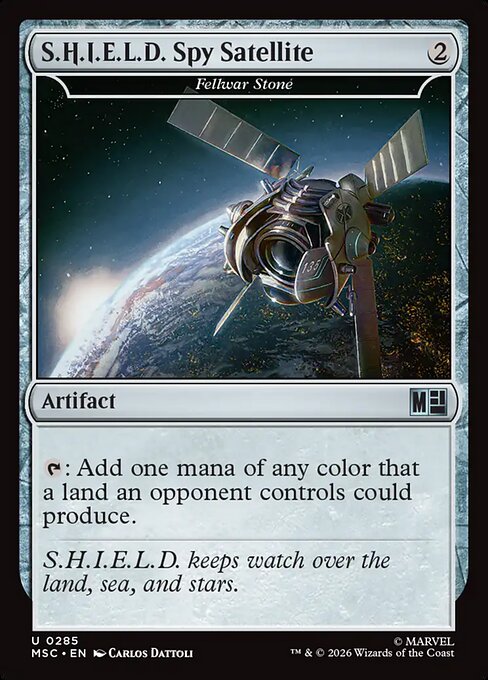
- Signets, talismans, and Fellwar Stone for the fast-mana rocks.
- Monologue Tax or Master of Ceremonies for Smothering Tithe. Both make Treasure, just slower and with more table input.
- Engulf the Shore or Filter Out for Cyclonic Rift. Both hit the whole table, your own permanents included, instead of only your opponents'.
- Idyllic Tutor for Enlightened Tutor. Three mana and enchantments only is a very different tutor.
For Bracket 3, spend slots deliberately. One Bant pixie deck put its flags on The One Ring, Aura Shards, and Thassa's Oracle and left Seedborn Muse in the binder. That uses the whole cap, and it's a real tradeoff, not an obvious one. I'd still lean toward stopping at two, as the verdict below argues. Once you are at Bracket 4 or 5, the flag count stops mattering, since there is no cap to count against.
The Verdict: Two Flags, Not Three
Treat the three-flag cap as a ceiling, not a target. Cap a Bracket 3 deck at two flags, and spend them on what the deck needs least from tutoring. The worst offenders are low-flag decks with fast, consistent engines (mutate, artifact storm, Sol Ring-style mana) that play well above their bracket.
Farewell is the card I'd cut from every Bracket 3 deck. Its raw power is modest, but it spends a flag on a reset that can exile artifacts, creatures, enchantments, and/or graveyards, depending on the modes chosen. Among Game Changers it is the most reliably unfun play pattern, and it favors the ramp deck that recovers fastest. The card people overreact to is Smothering Tithe, which makes a Treasure whenever an opponent draws a card unless that player pays {2}. Its snowball only happens when opponents ignore that tax, which makes it one of the lower-powered Game Changers despite the table's reputation for hating it.
The stance you may dispute: Sol Ring-tier cards should be disclosed in Rule 0 as if they were flagged. Before your next game, tell the table your turn-win estimate alongside the number of Game Changers you run. A table that hears only "two flags" will picture the wrong deck, and the estimate is what corrects it.